On a personal note.
Several years ago I was diagnosed with a genetic condition, Alpha-1-Antitrypsin deficiency, that affects my lungs. My body is missing a protein that prevents destruction of lung tissue. I have remained fairly stable with a slow deterioration. Summer 2024 my respirologist again suggested a therapy to augment, or replace, this protein. This medication is given IV weekly not to heal but to prevent further deterioration. With the assurance that I could be taught to self infuse, I decided to give it a trial.
When Alberta Health Care works, it works very well. After the doctor made the referral, I was contacted in just a couple of weeks by the company that co-ordinated the entire process. Appointments were made at the clinic doing the infusions, and the speciality pharmacy in Edmonton sent the medication to my house. It took just over 5 weeks from seeing the respirologist to having my first infusion on July 30.
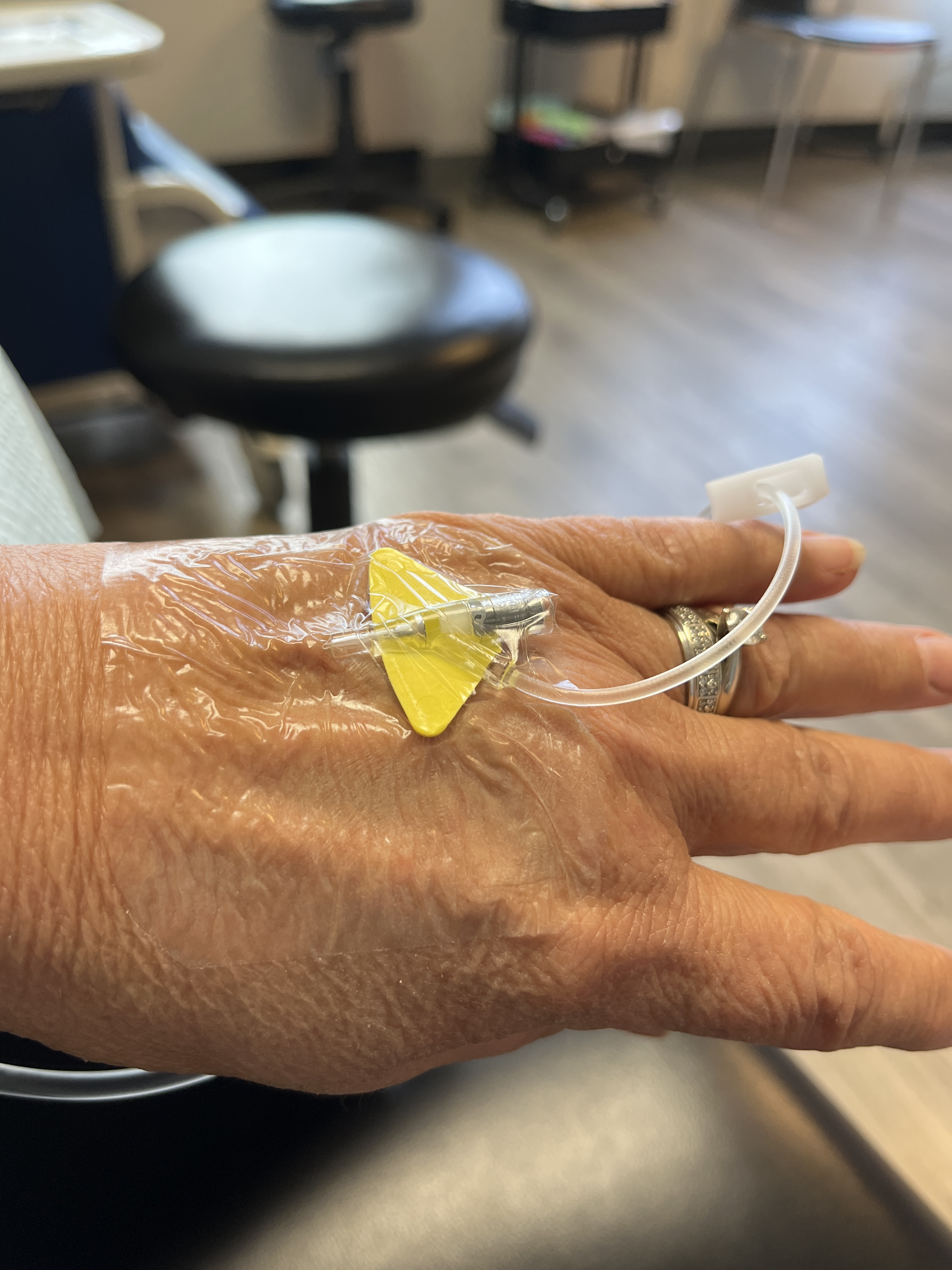
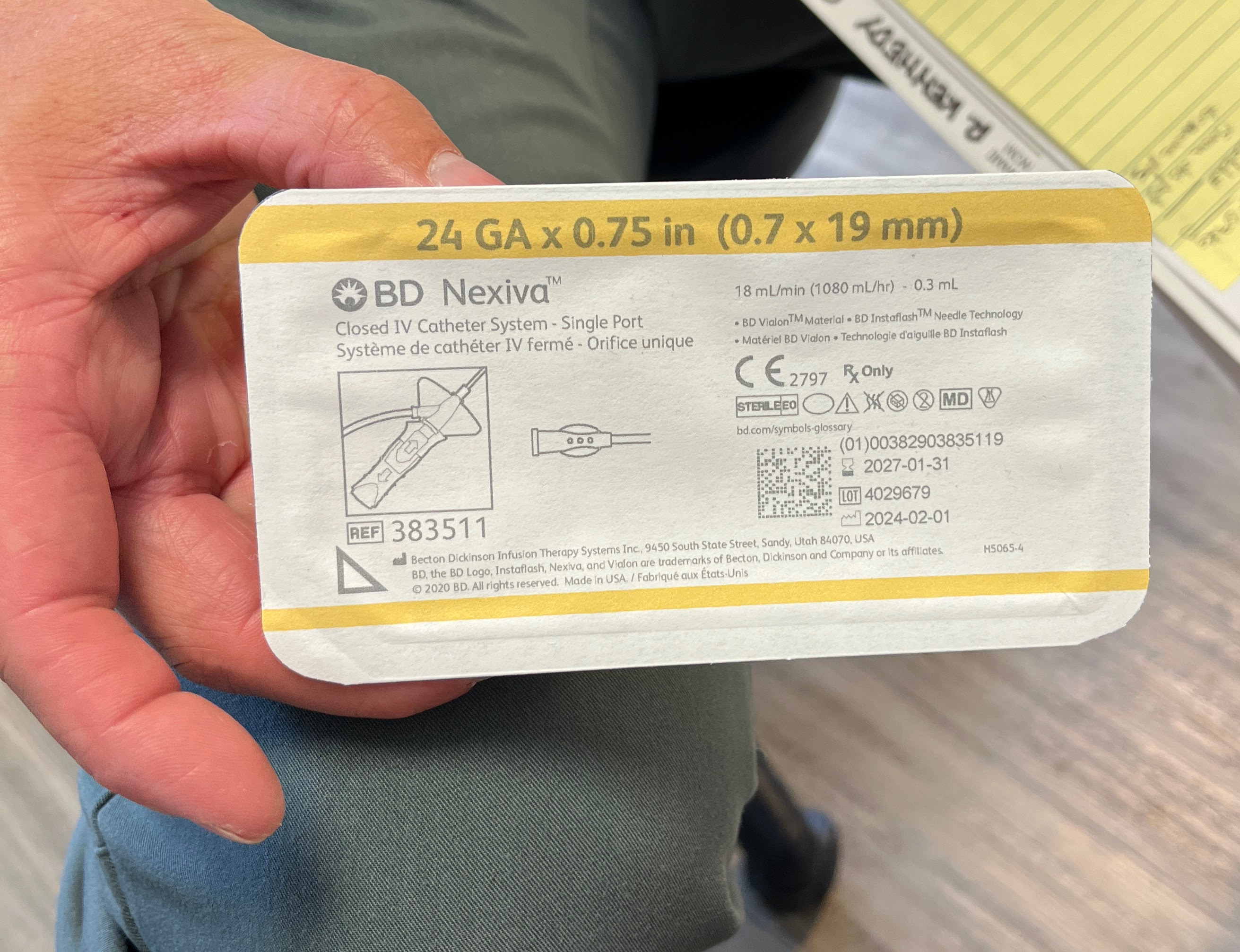
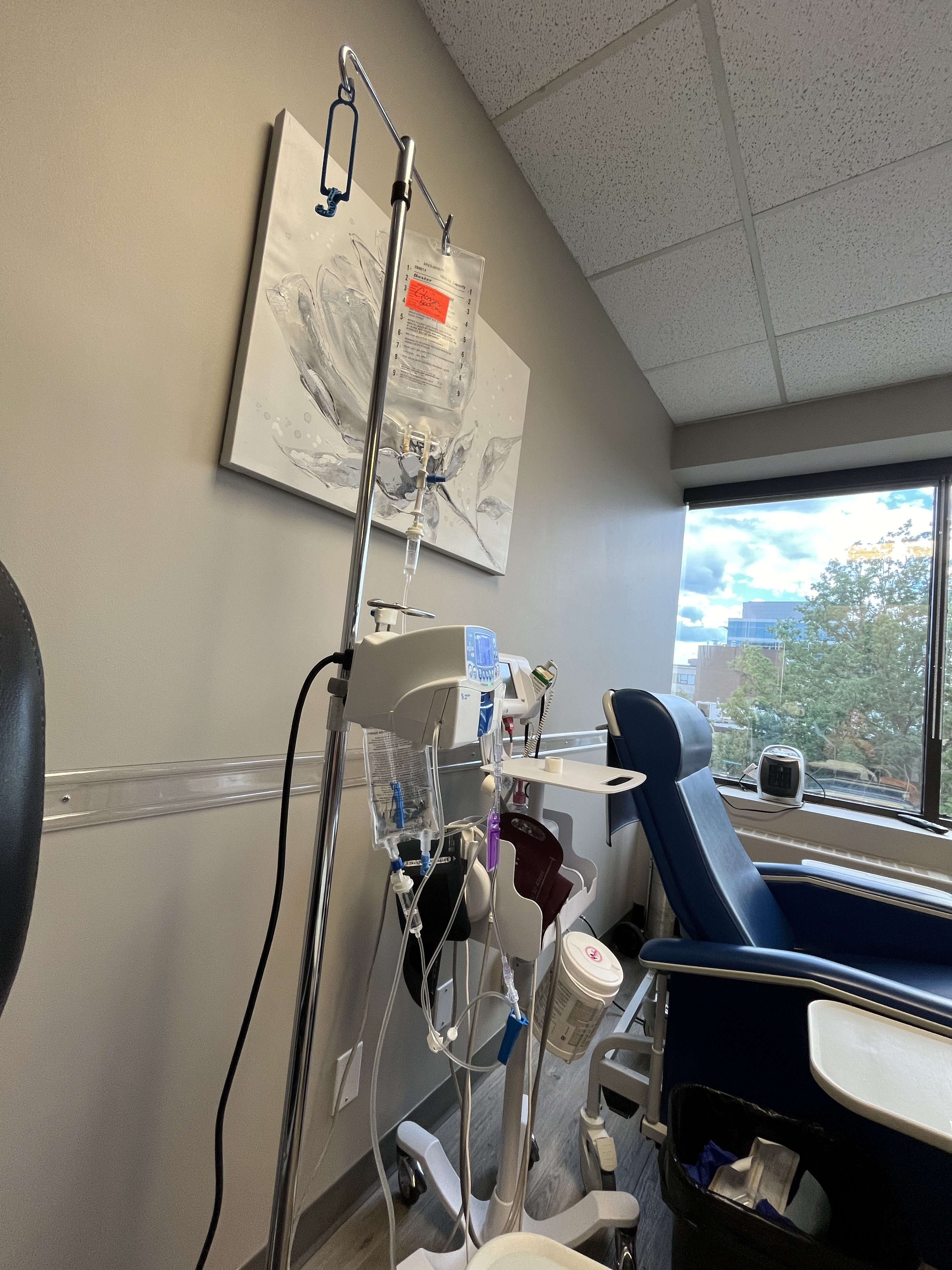
The staff at the clinic were wonderful. However, I knew there was no way I was going to be able to start an IV on myself using one hand. This was a problem because not being able to do the infusions myself meant there would be no way I could to go to Panama for the winter.
The nurse doing the treatment suggested a port-a-cath. I had no idea this was an option but decided to pursue it. With a phone call, the respirologist agreed to it and a referral was sent. Again, the stars must have been aligned as one month later I received a letter from Interventional Radiology at South Health Campus with an appointment date. There was an option to go on the cancellation list which I took. Two days later on August 29, 2024 the port-a-cath was inserted.
The port-a-cath is a little ‘plastic’ device that is implanted under the skin on your chest. One side of this device has a ‘tube’ that is attached just above my clavicle where it is sutured in place. The other end is a catheter that runs from this little circle device through the superior vena cava to the right atrium. I was told to give it a month to heal and then go live my life.
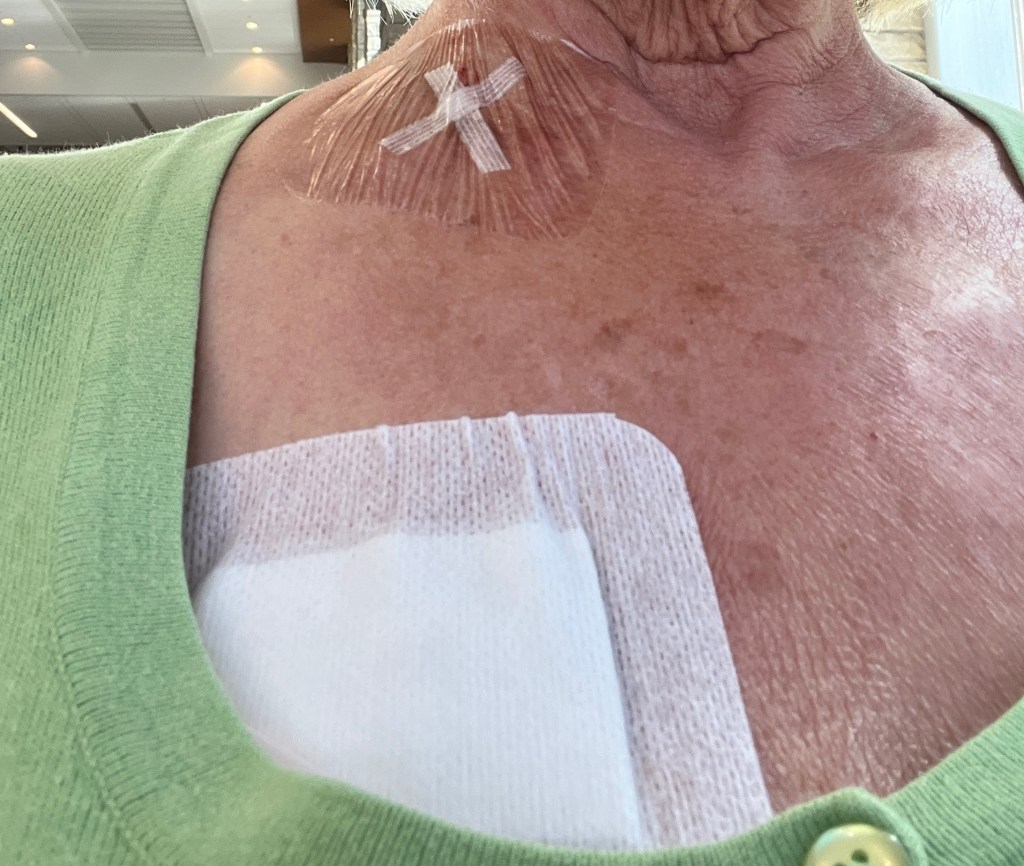
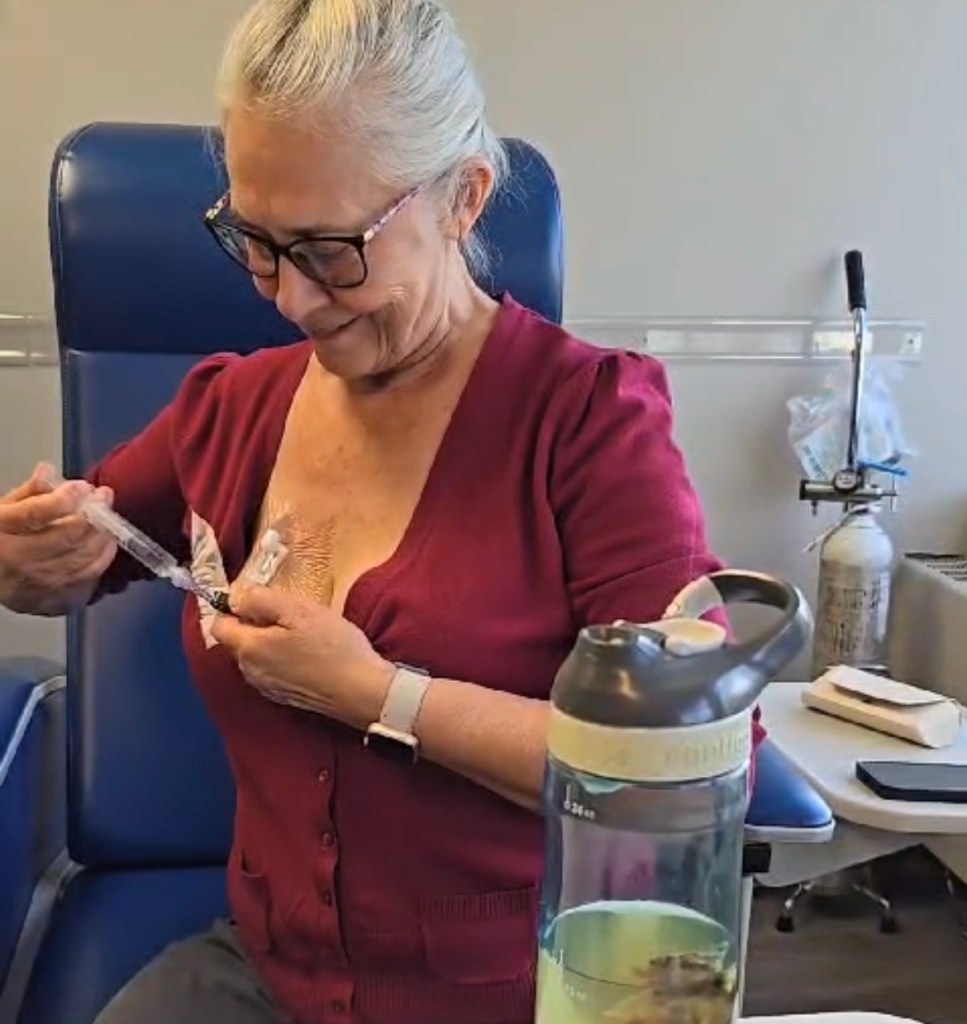
The port is ready for immediate use, however the clinic opted to wait two weeks to give the area a chance to heal. I was the first patient this clinic had taught to self infuse, so it was a learning experience for everyone. It’s quite the process Clean the insertion site and let it air dry otherwise the dressing won’t stick. Set up a sterile field. Prime the ‘gripper’, the needle that’s inserted into the port, with normal saline (in a 10 ml syringe) so it is ready for insertion. Set up a primary IV, attach to the gripper and start it dripping. Put the medication into an empty IV bag and set up this secondary line.
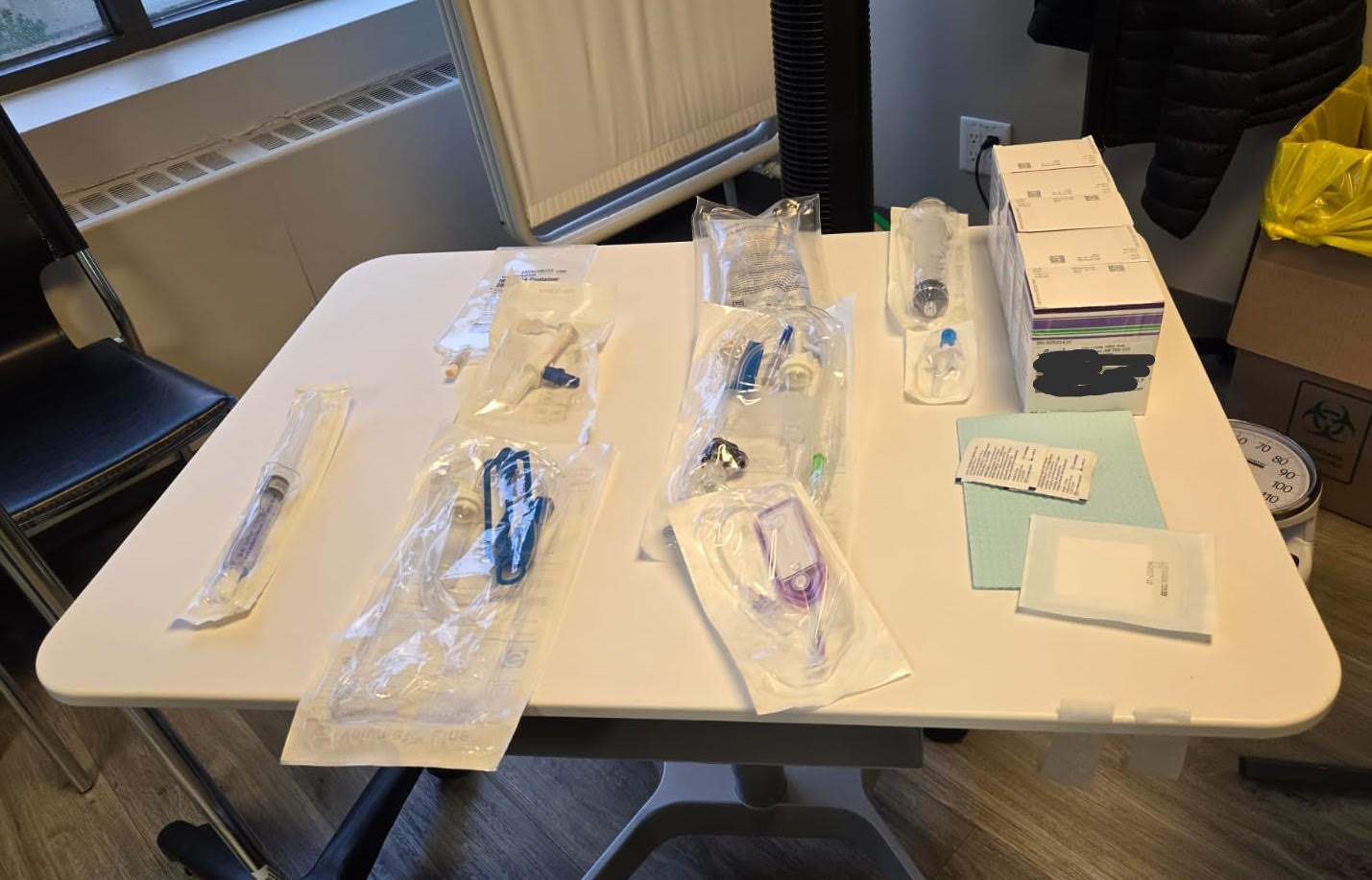
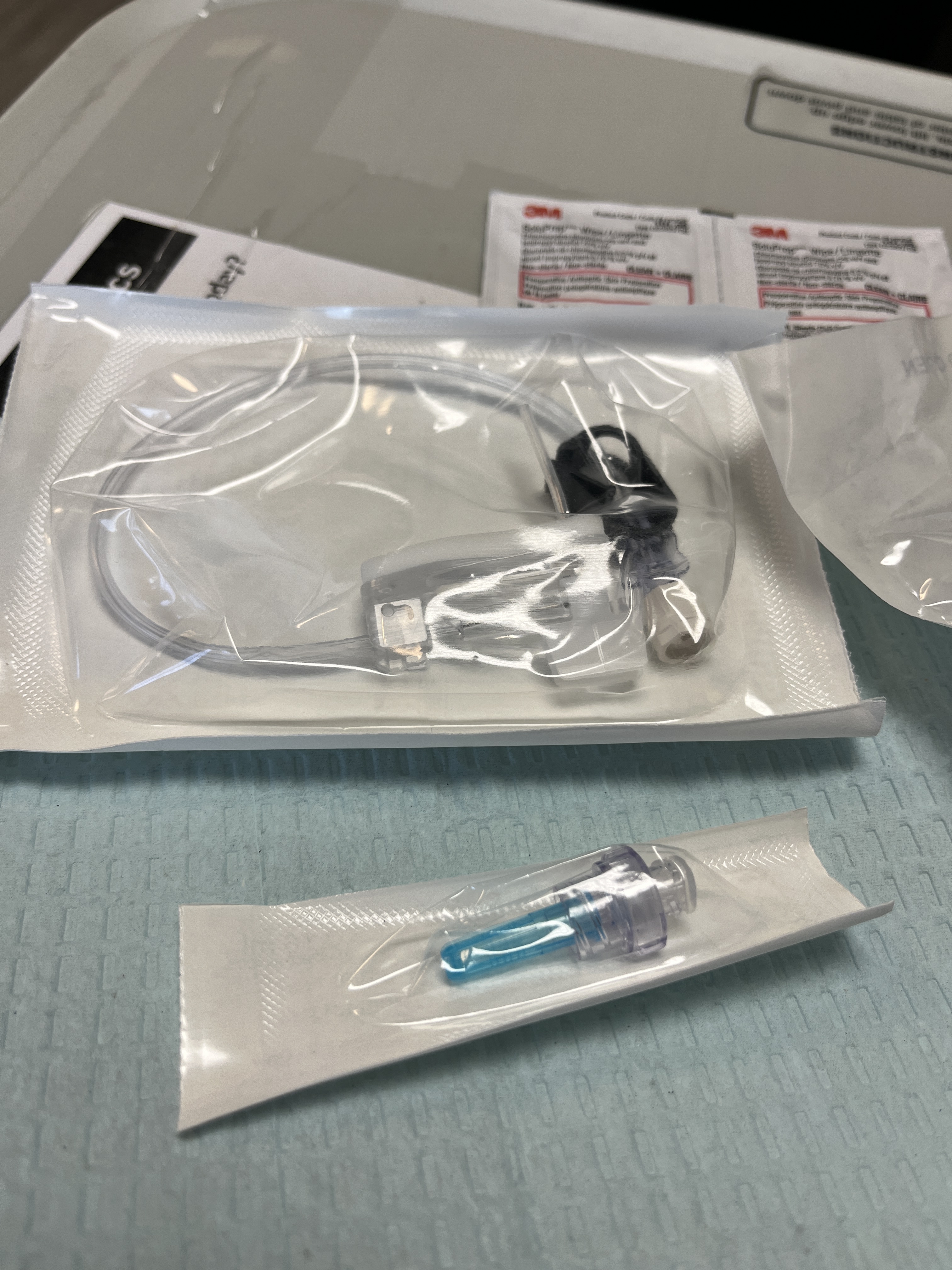
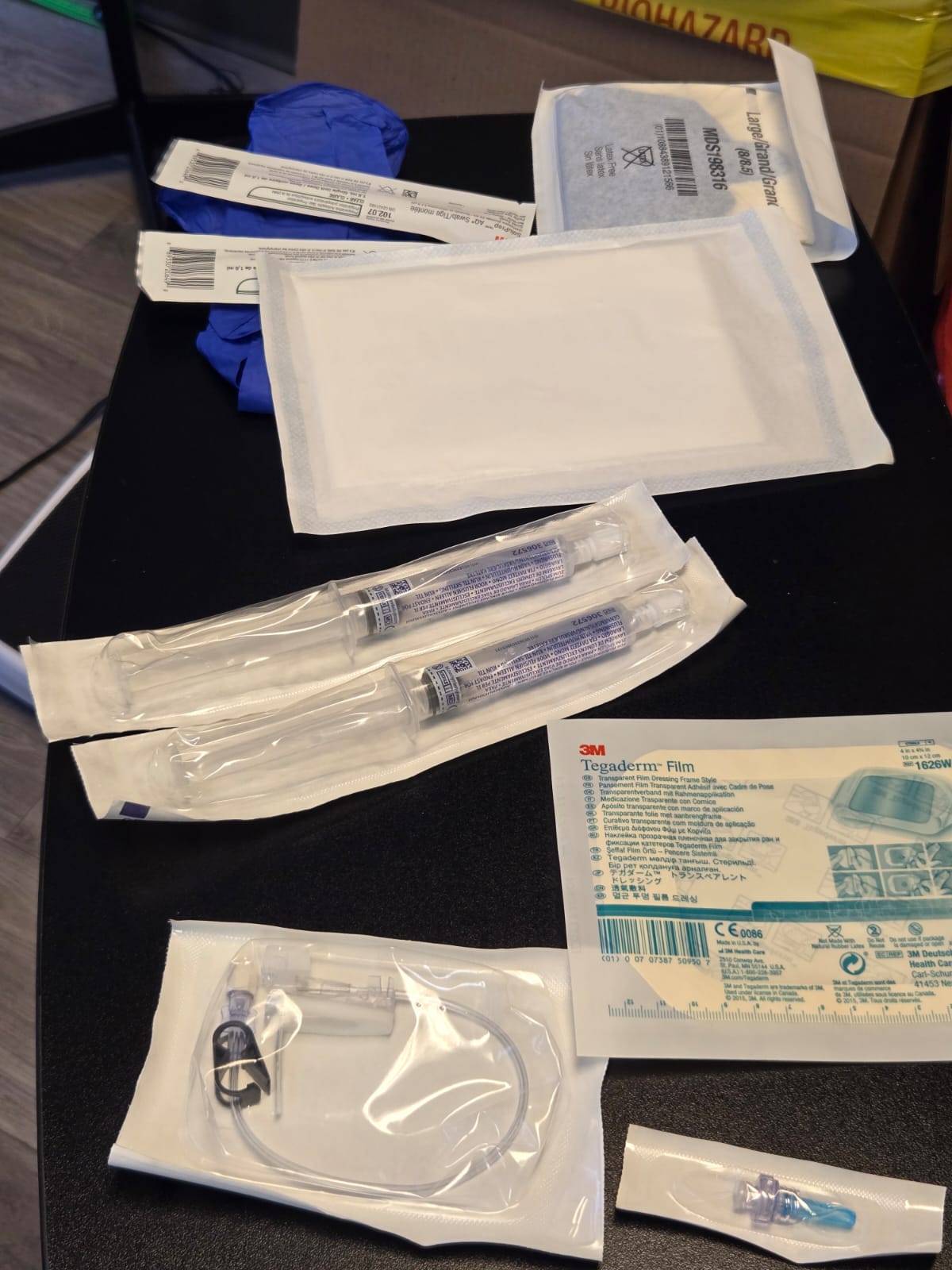
There are three little knobs on the port, and the gripper goes in the centre of this tiny little area. Everything is backwards as I am using a mirror. My port is low on my chest so I am able to look down to make sure the gripper is flush with the port.
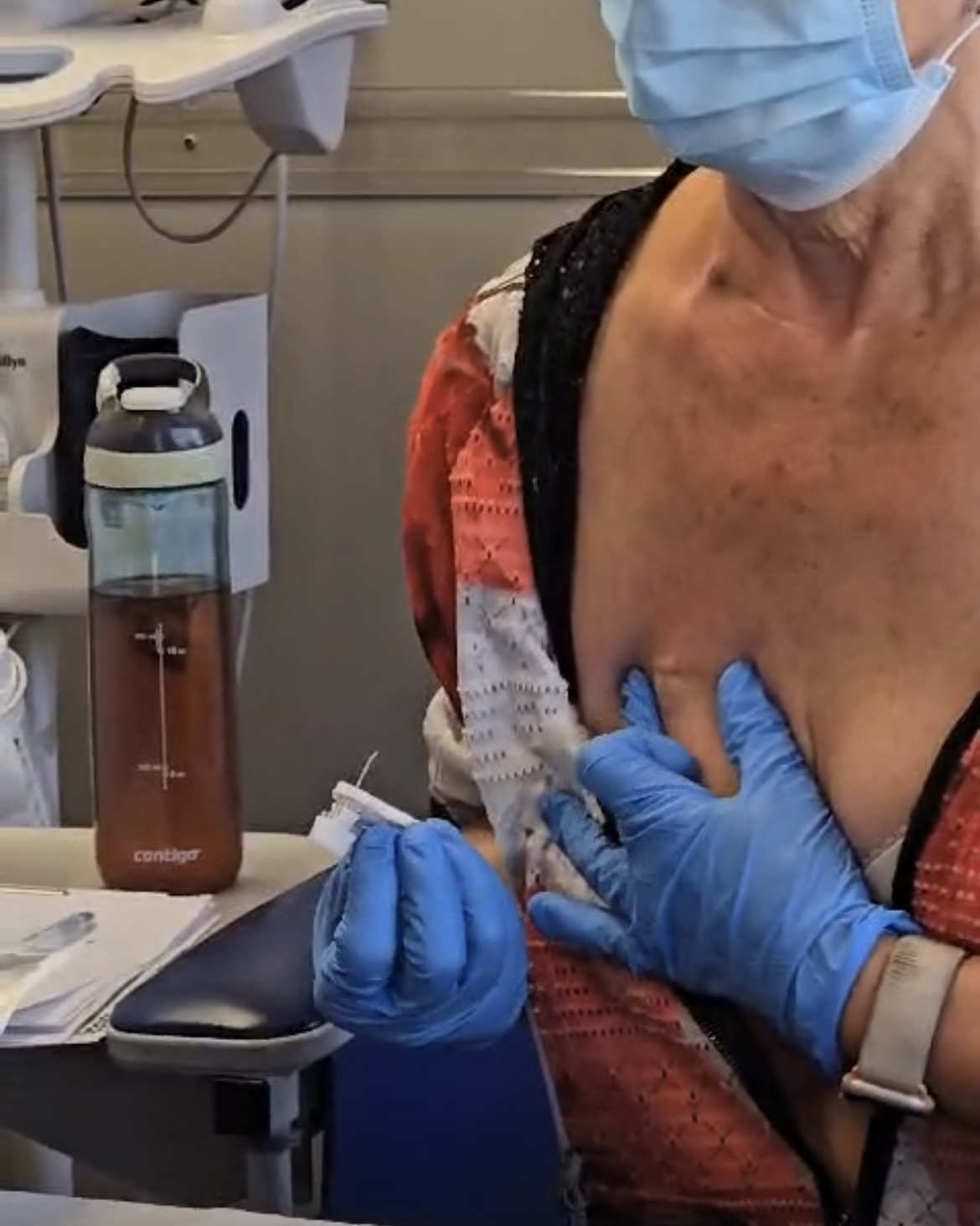
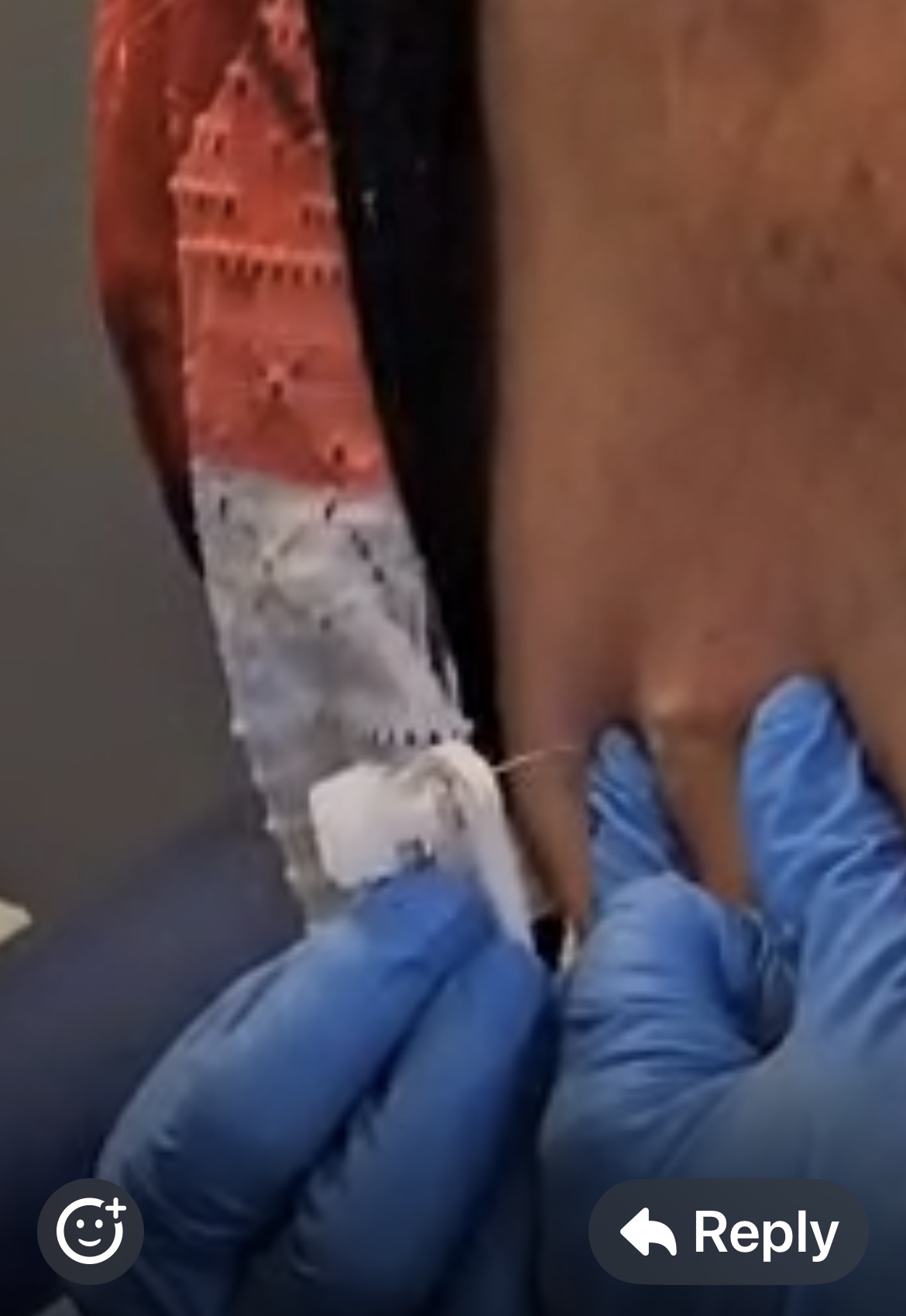
Such a relief when you pull back on that plunger and get blood. It means success.
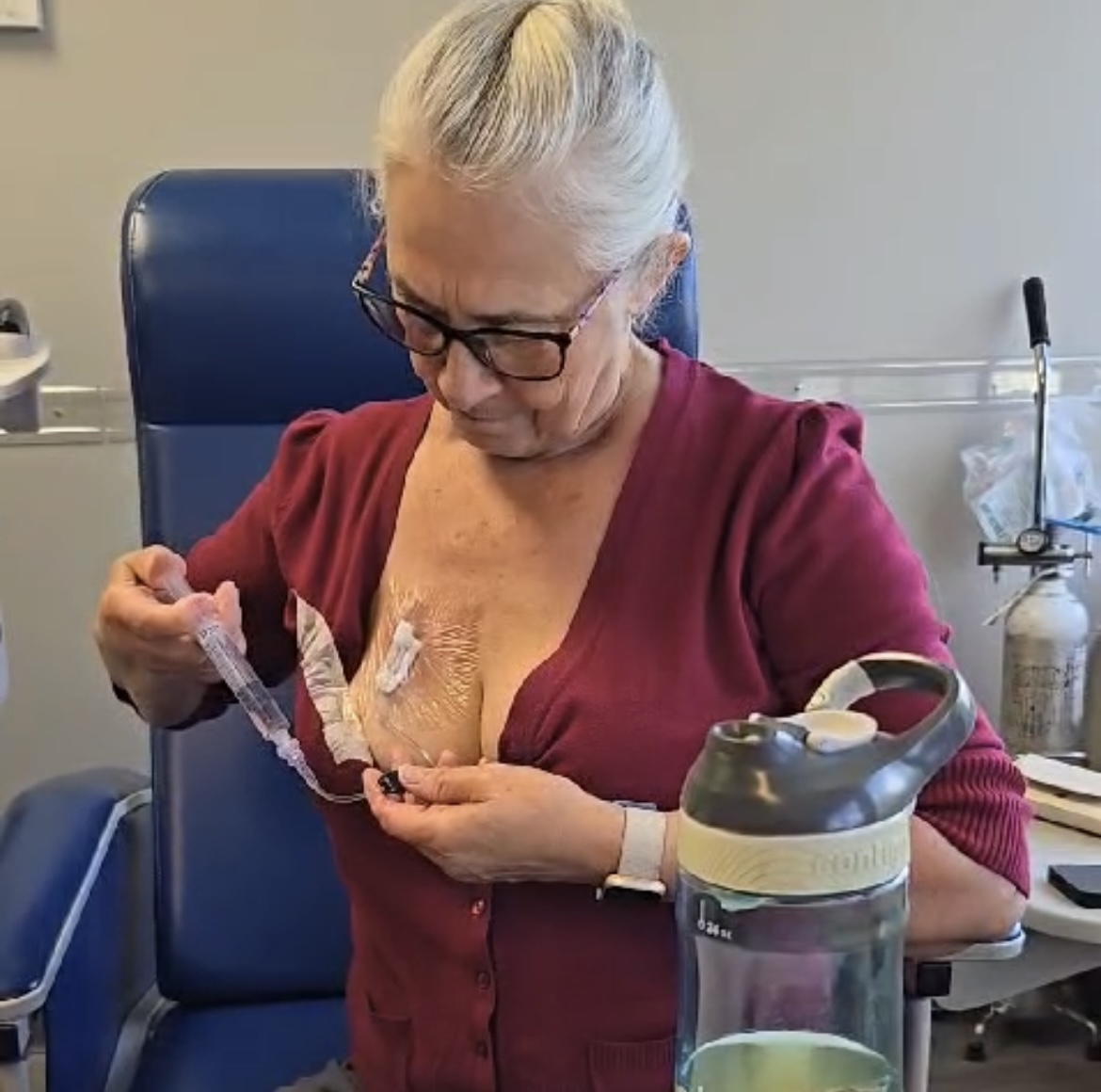
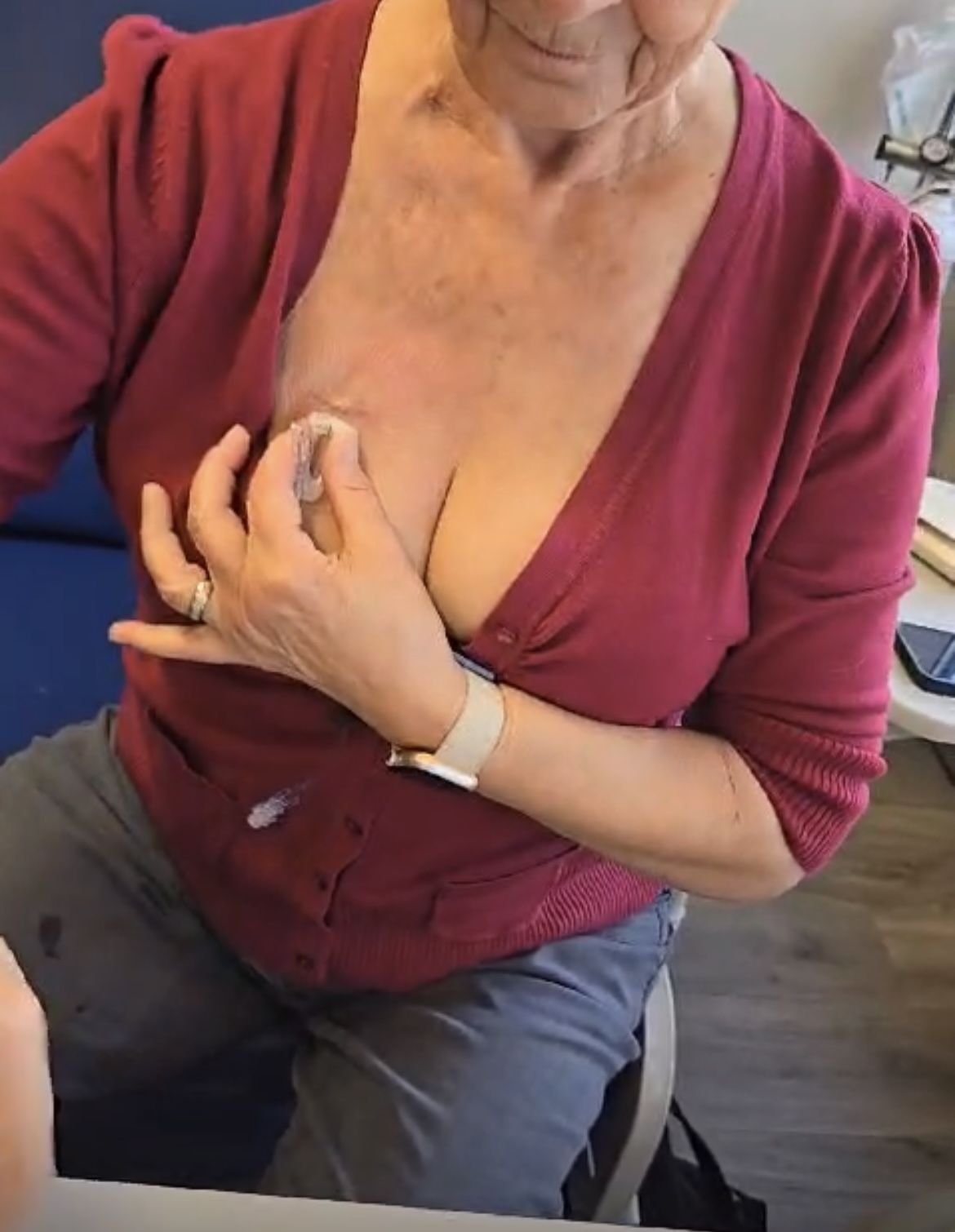
After everything has run through, the line gets flushed, the gripper removed and do it all again in a week.
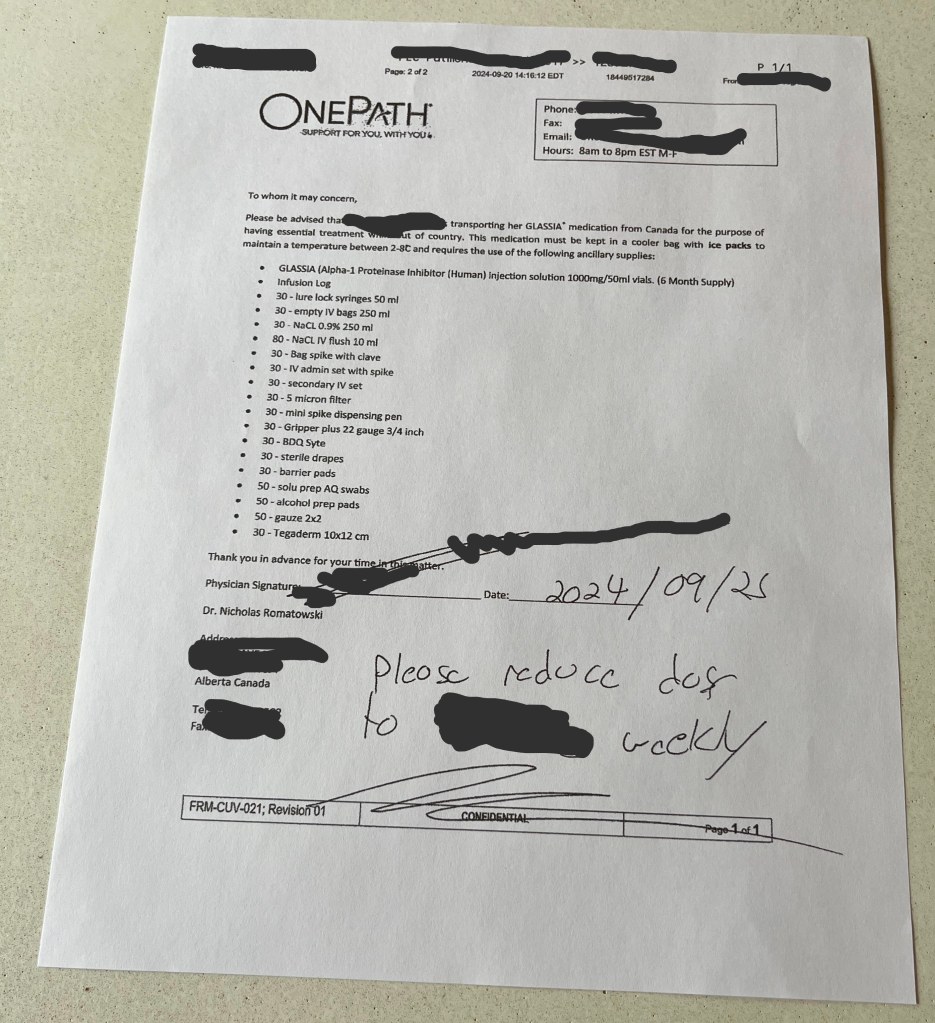
I needed six months of supplies to get me through the winter. One Path, the support company, sent me boxes of supplies. The clinic was amazing in helping me get organized, even supplying a fold up IV pole to go in my suitcase.
The airlines (Porter and Air Transat) needed a letter from the doctor saying what I needed to bring and why. The supplies went in a large suitcase and there was no charge. The medication had to come on the plane with me to be kept cold. Two large cooler bags were not a problem.
Everything went well for the first month. Then I began to have trouble getting blood back. It was so stressful as I had no idea what, or if, I was doing anything wrong. I even saw a doctor who inserted the gripper and was unable to get blood back. Thankfully I talked to two nurses who work in cancer care. One had 30 years experience working with ports and was able to give me practical problem solving tips. It worked and the last four infusions have been smooth.
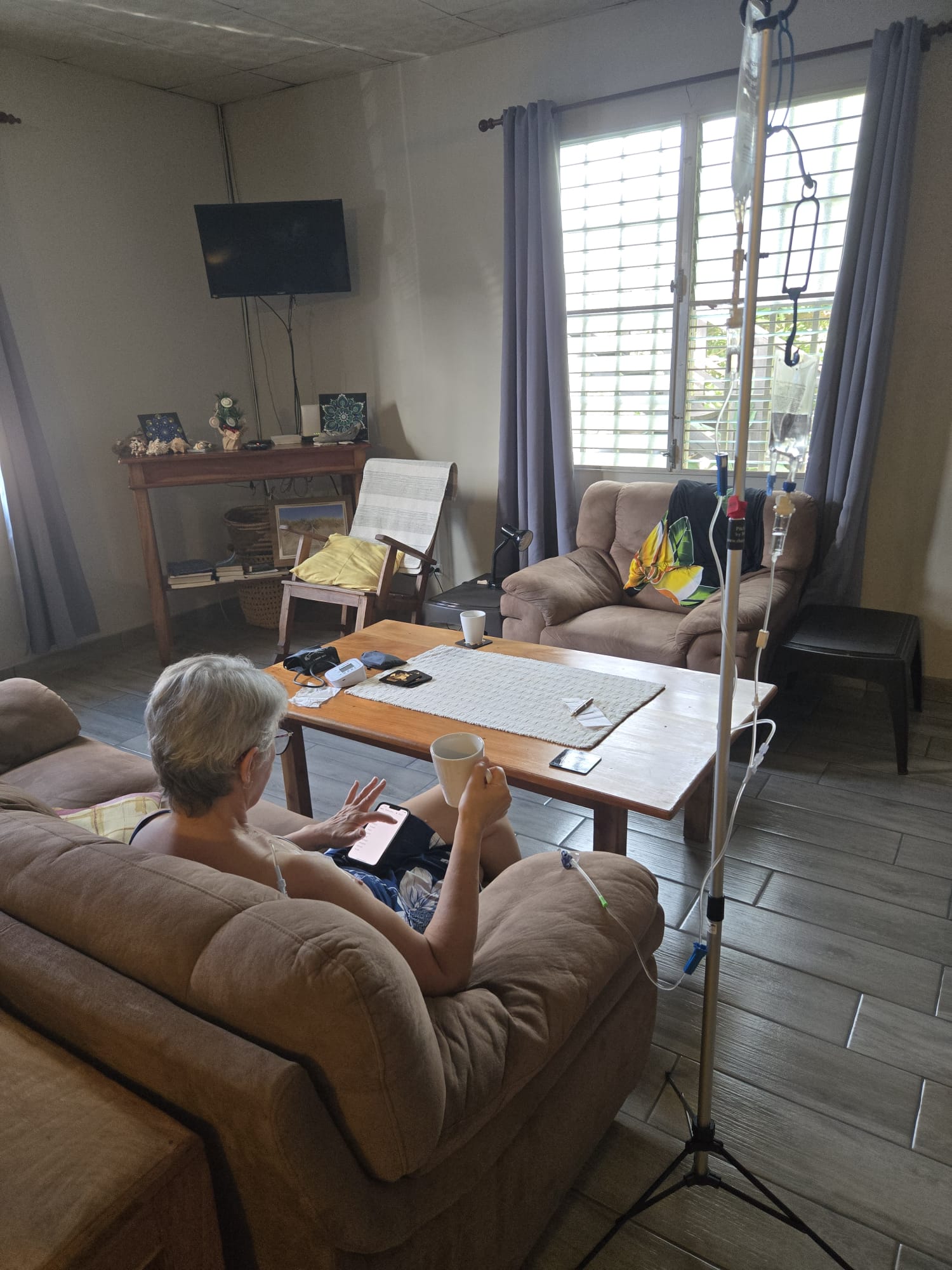
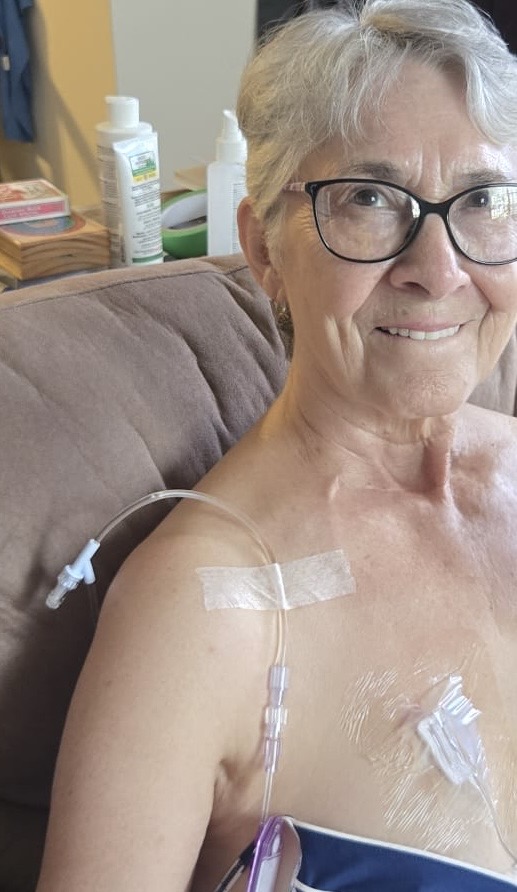
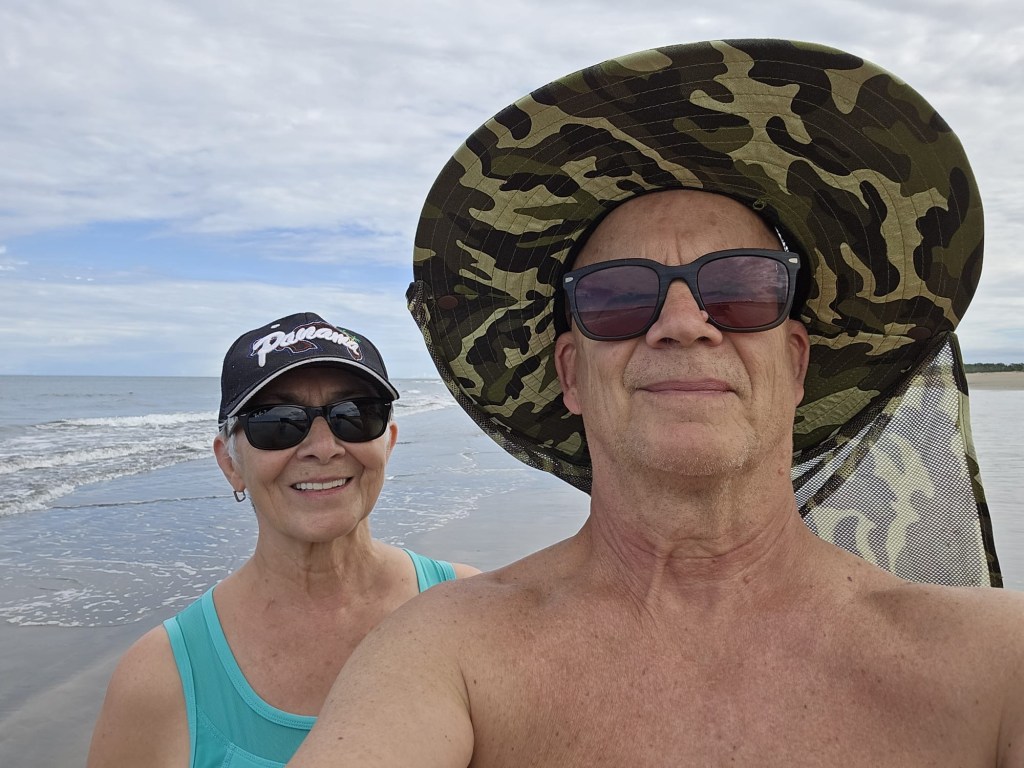
In hindsite, being educated with tips on what to do in different scenarios would have been really helpful. But here we are, enjoying the sun, renovating a house and living the life. So yes, it has been worth it.
Cheers
Ruth
 ruthkennedysretirementblog
Thank you for sharing. I’m glad all is well with you & DarrelTake care,Linda Sent from my iPad
LikeLiked by 1 person