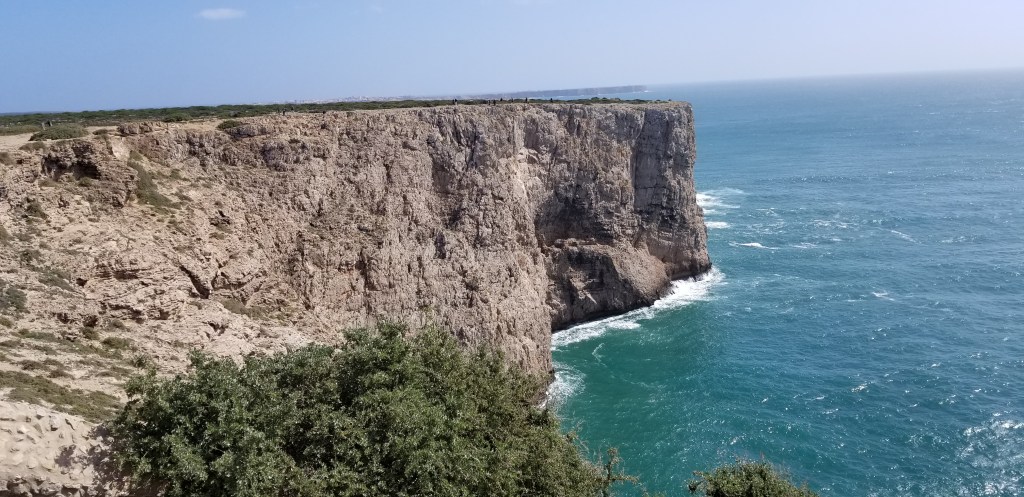
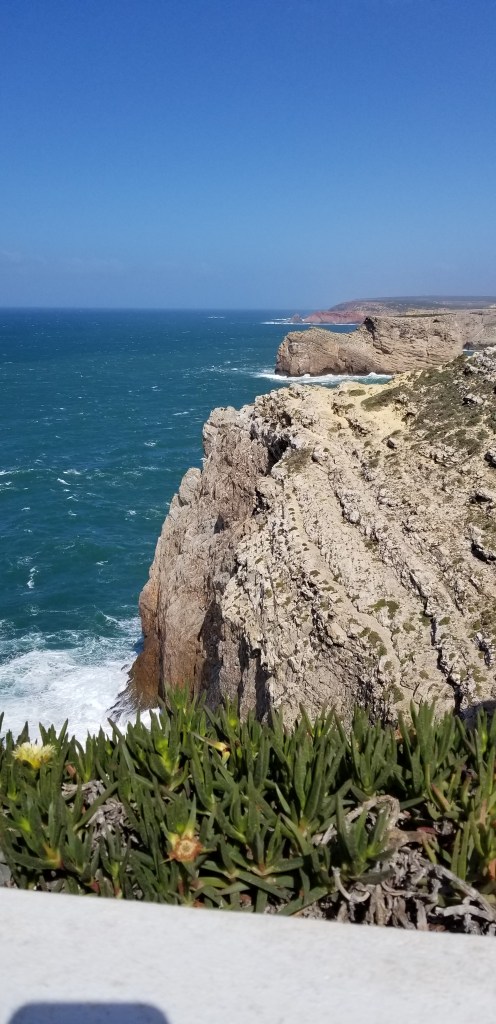
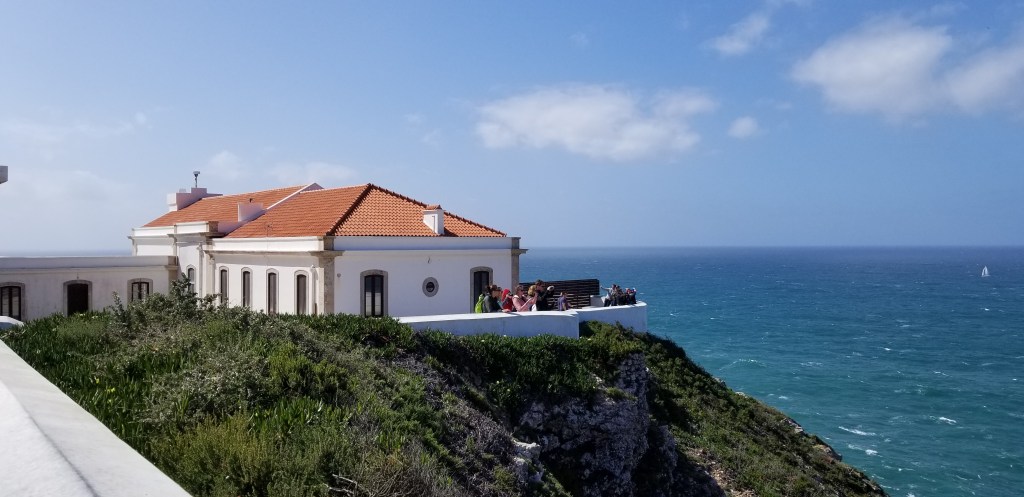
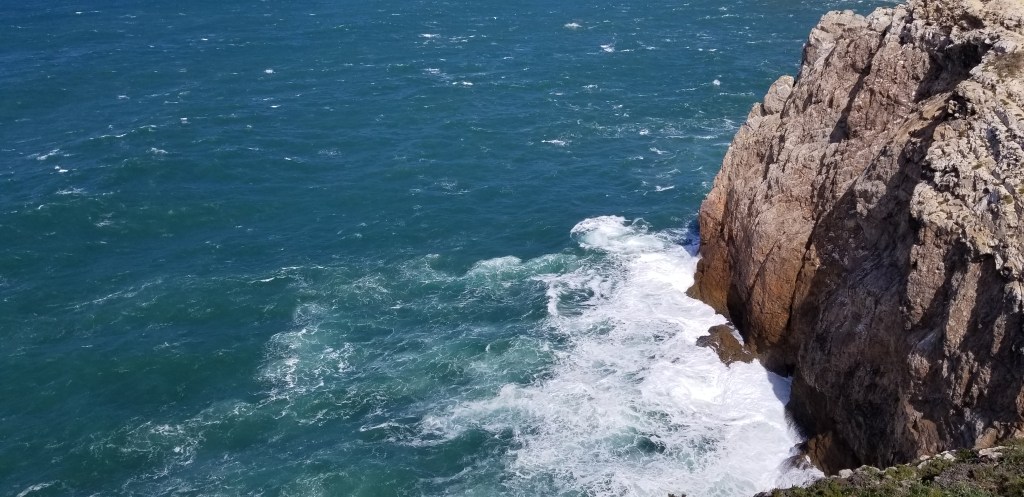
We went to the end of the world. Our first stop was Capo de Sao Vincente, this most southwesterly extremity of Europe, up until the 14th century, was known as the end of the world. It is wild, rugged, beautiful and windy.
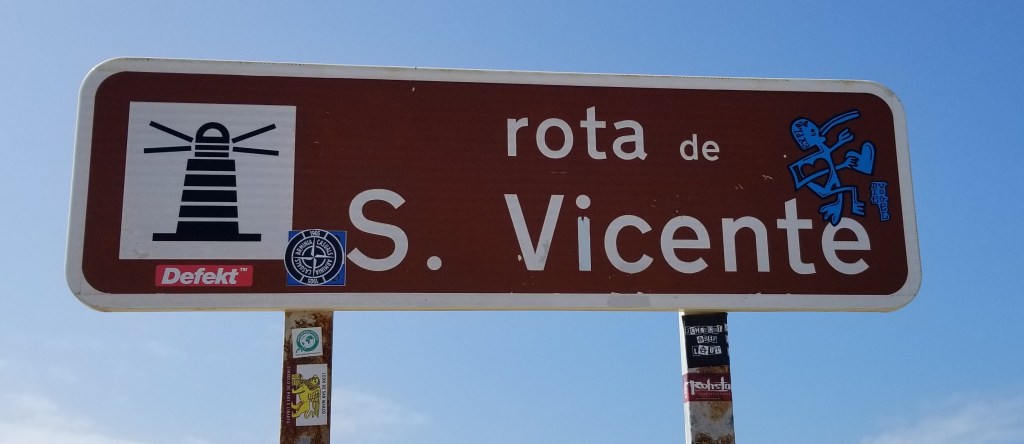
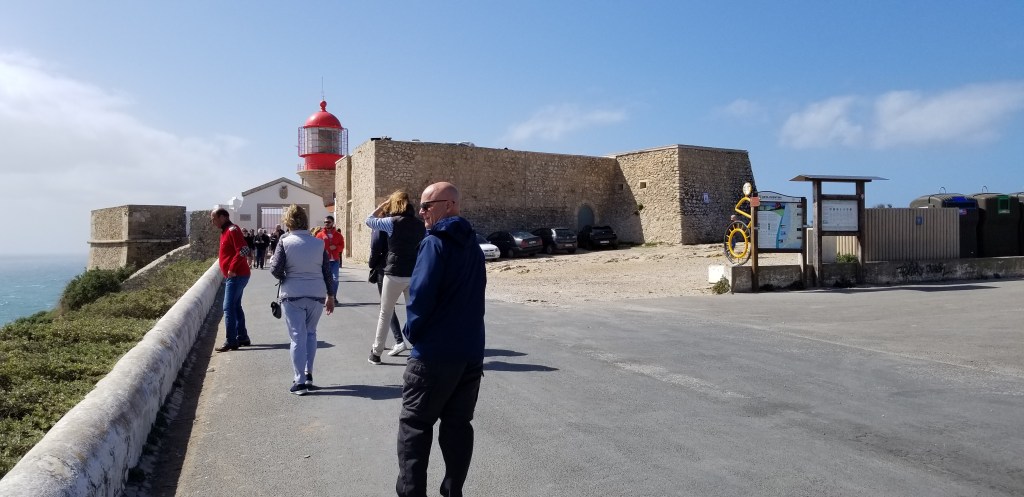
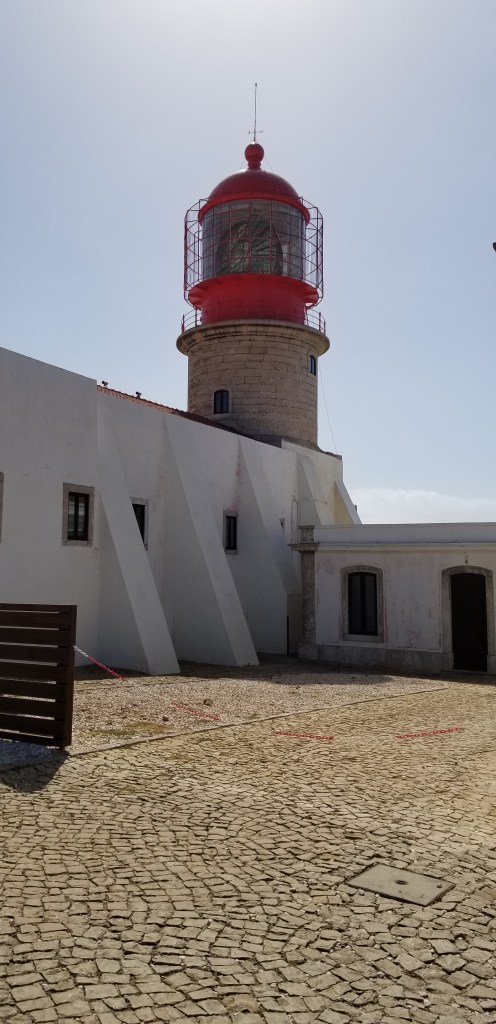
I read somewhere that in the 16th century the first “lighthouse” was a protected fire. The current lighthouse has been operational since 1846.
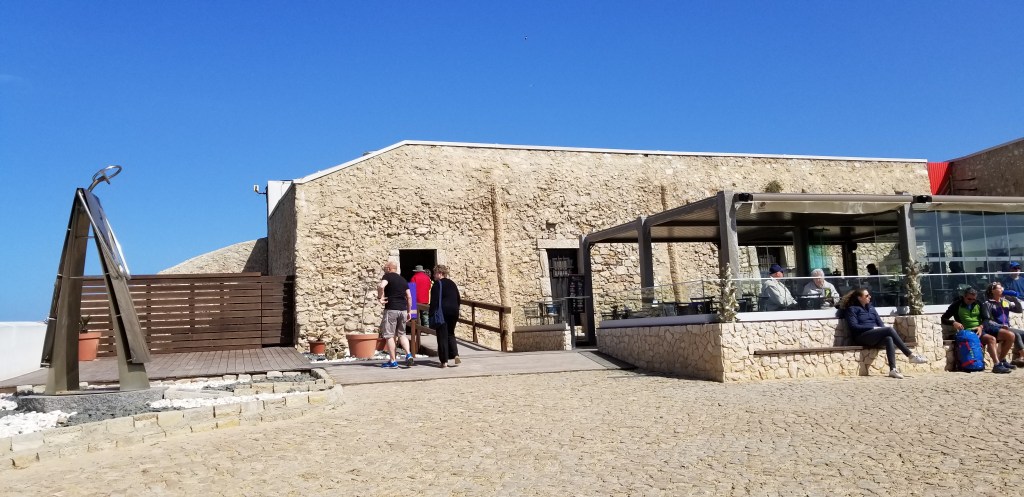
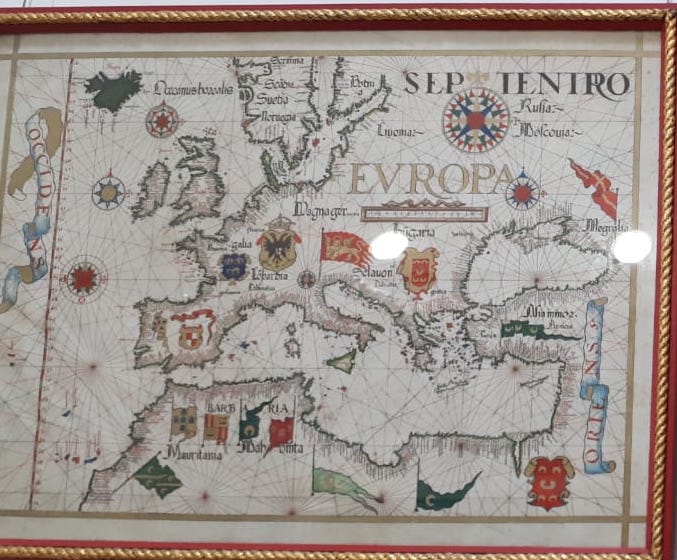
We also visited the museum. There were a couple of walls of maps from the 16th century.
Apparently the originals are in Vienna’s Imperial Library in Austria.
The landscape reminded me of going “down the coast” in Newfoundland. The vegetation and trees are stunted due to the constant battering with the wind.
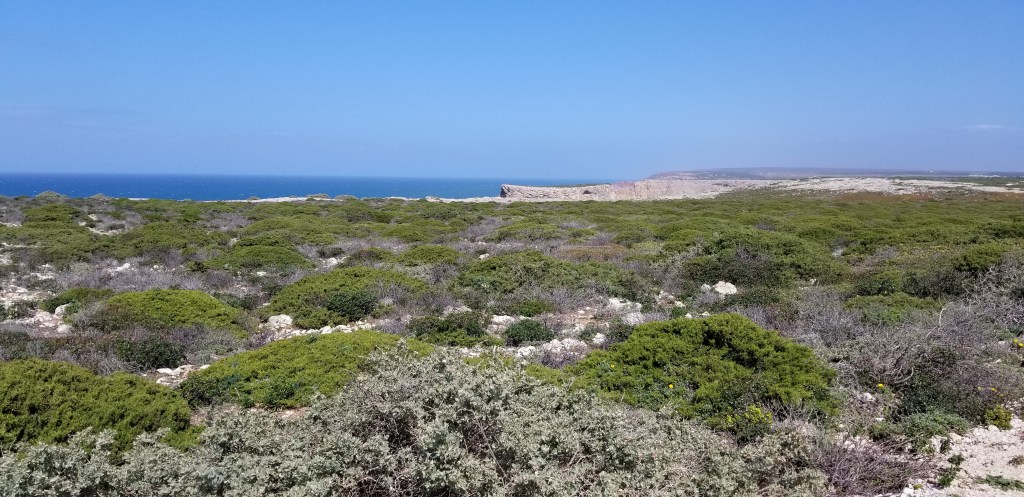

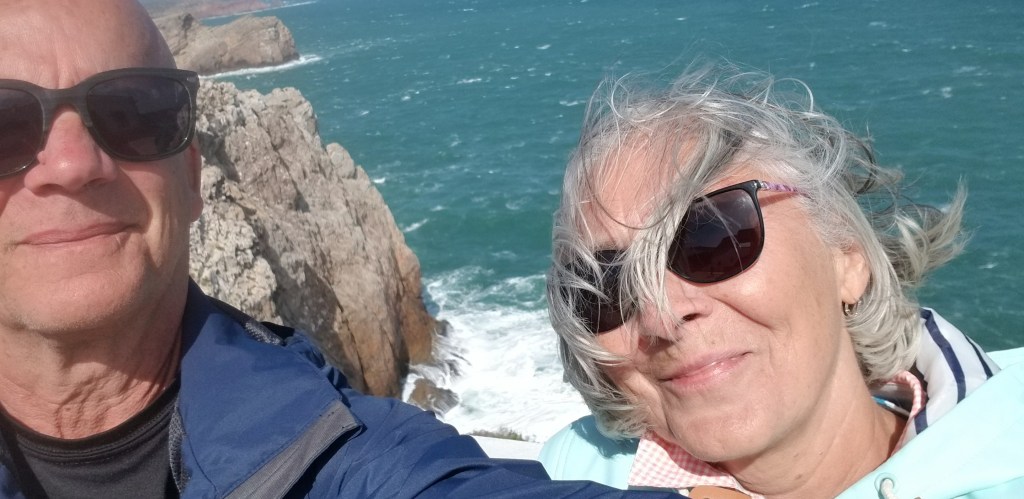
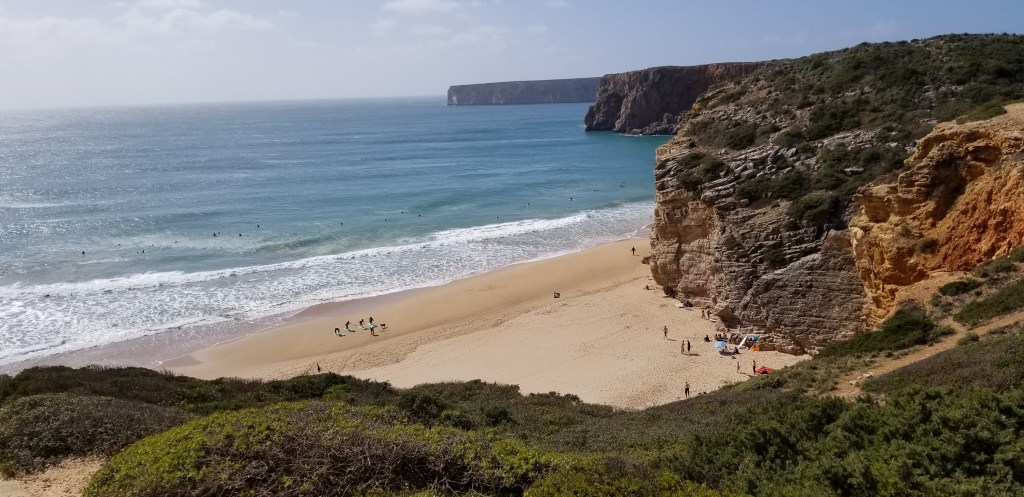
Sagres is known for its surfing, maybe the wind helps a bit:) After leaving S. Vincente we passed a beach where the parking lot was full of all kinds of motorhomes. And lots of surfers.
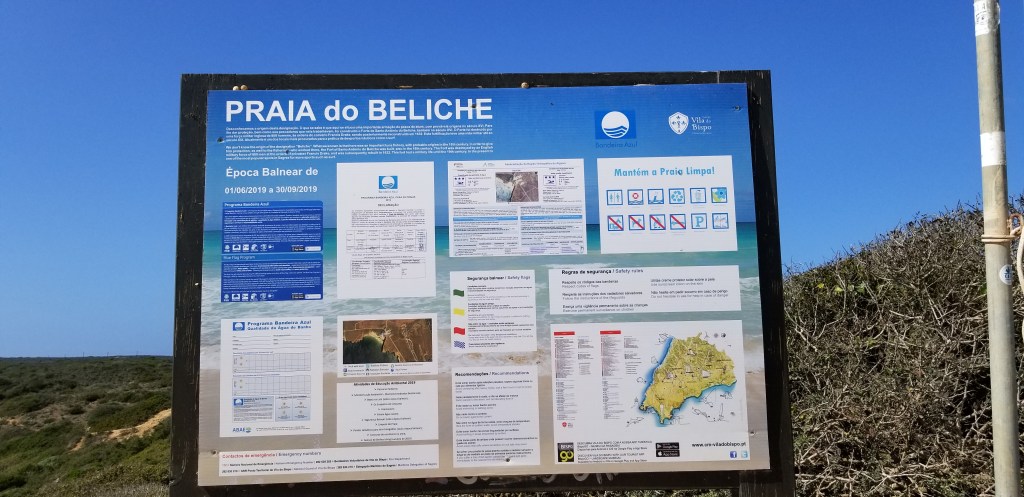
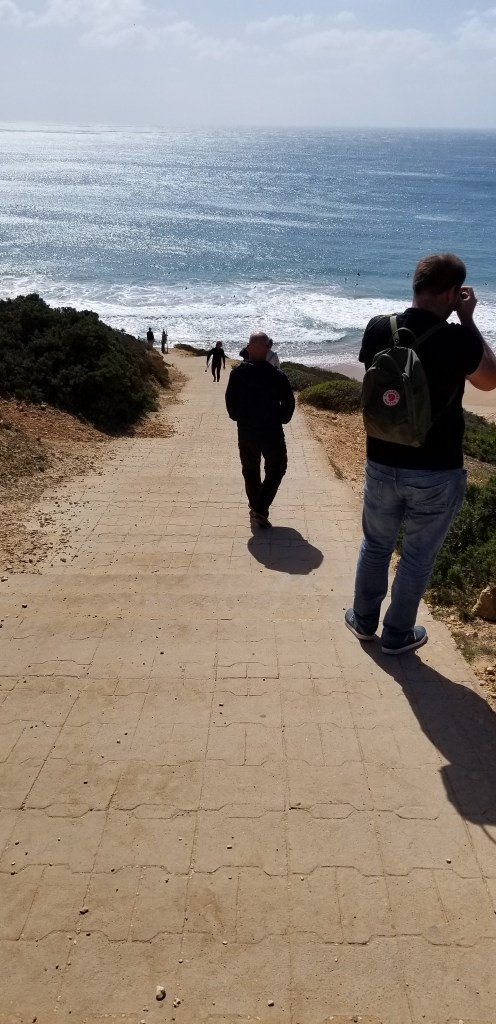
There was a paved path, and steps, down to the beach. The beach must have been sheltered from the wind as somebody was using an umbrella.
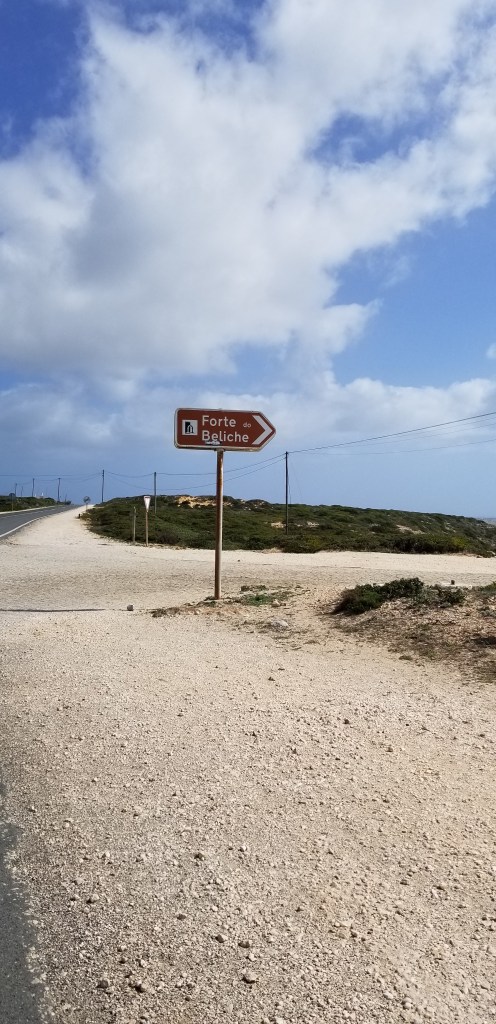
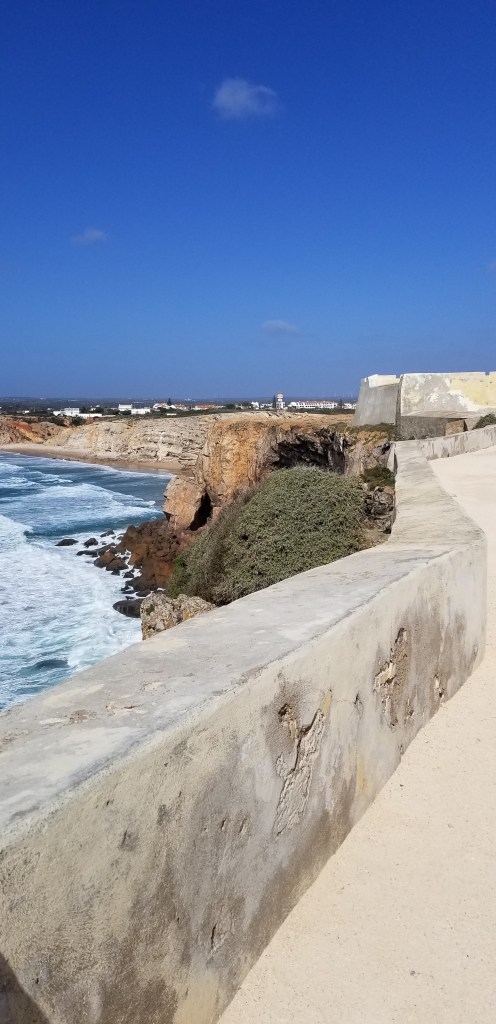
Our next stop was Fort Beliche. This fort was built before 1587. It was damaged in the big earthquake of 1755. There has been some restoration done and there is a restaurant that was not open when we were there.
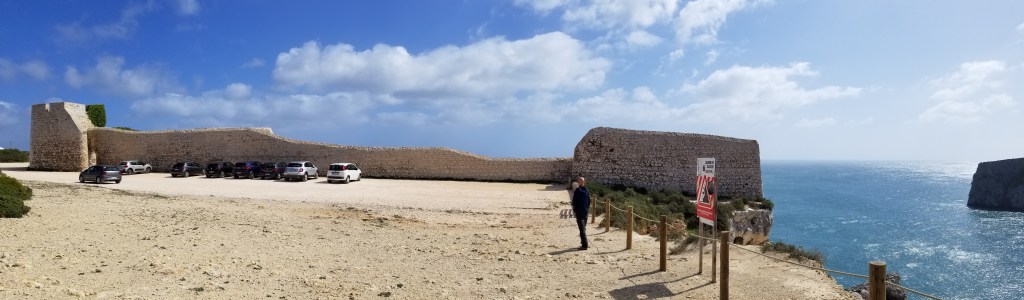
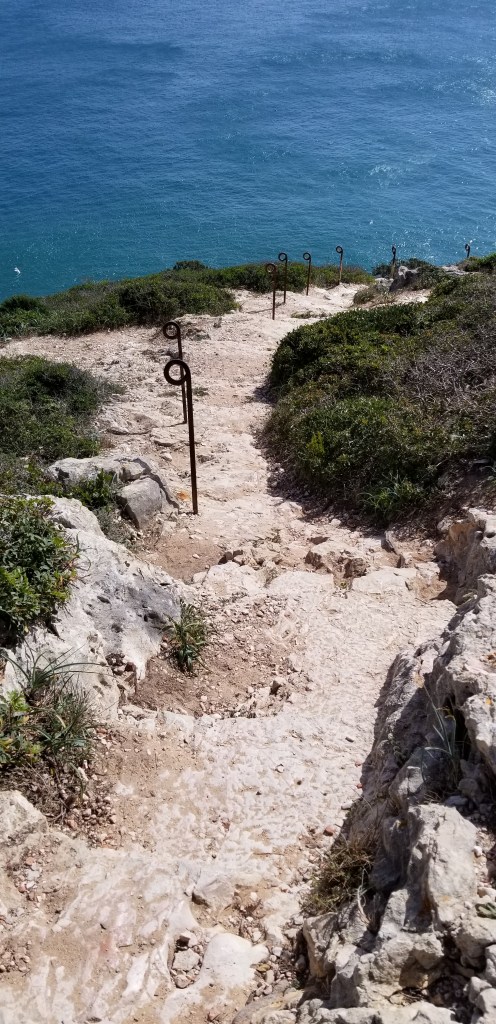
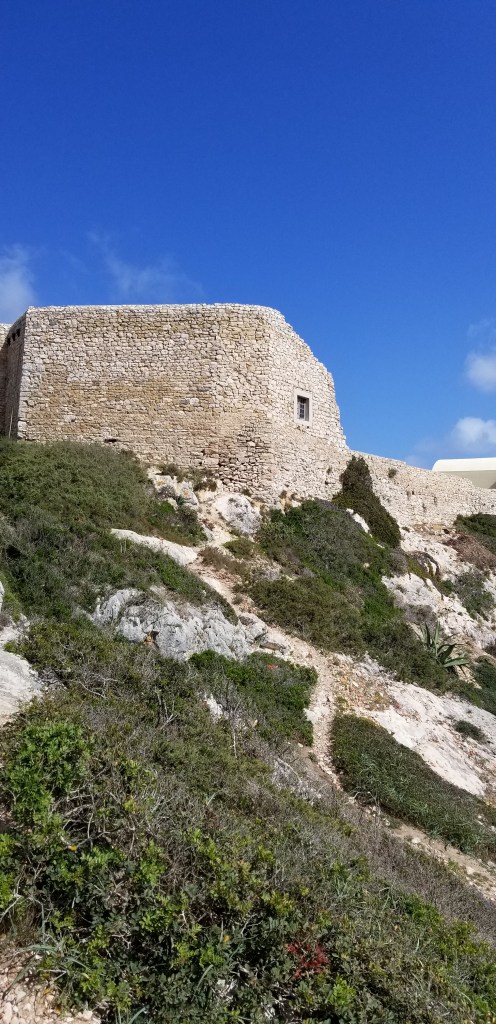
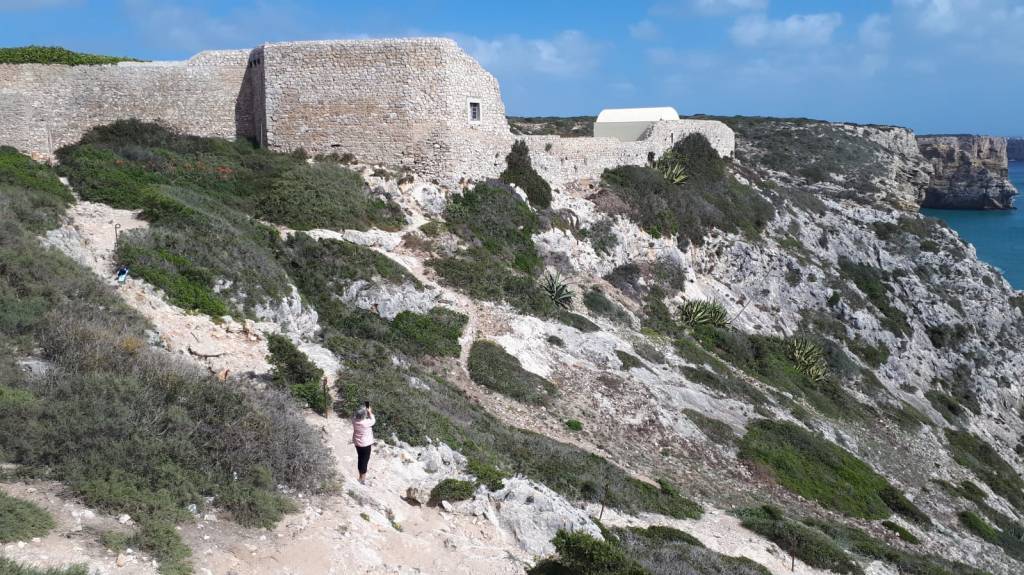
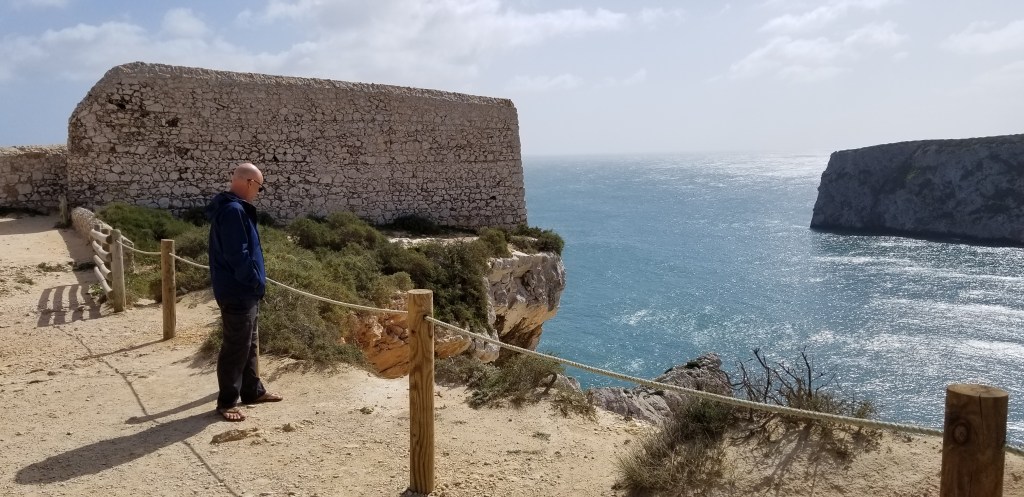
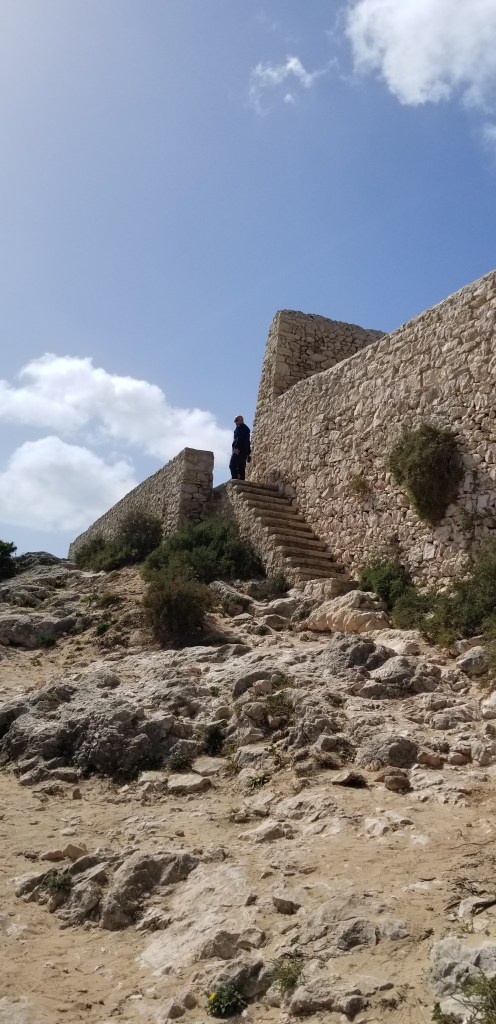
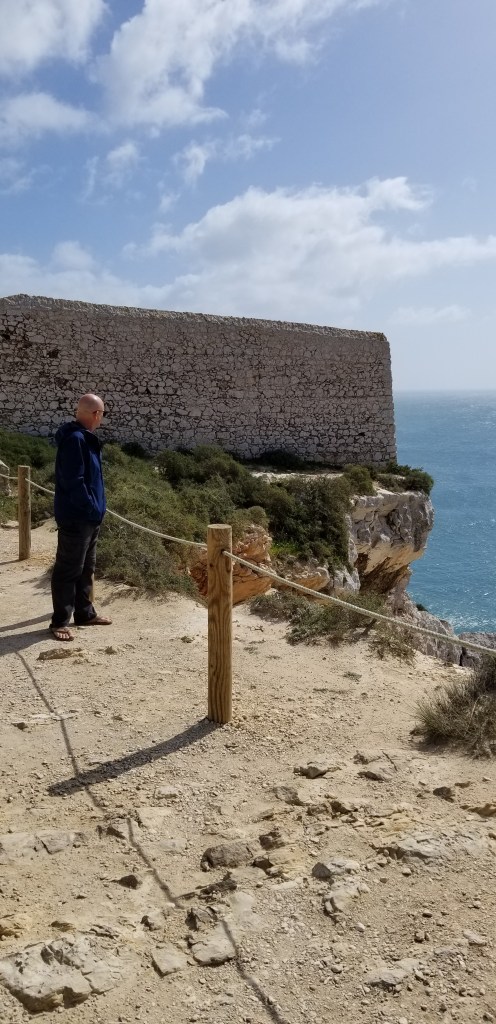
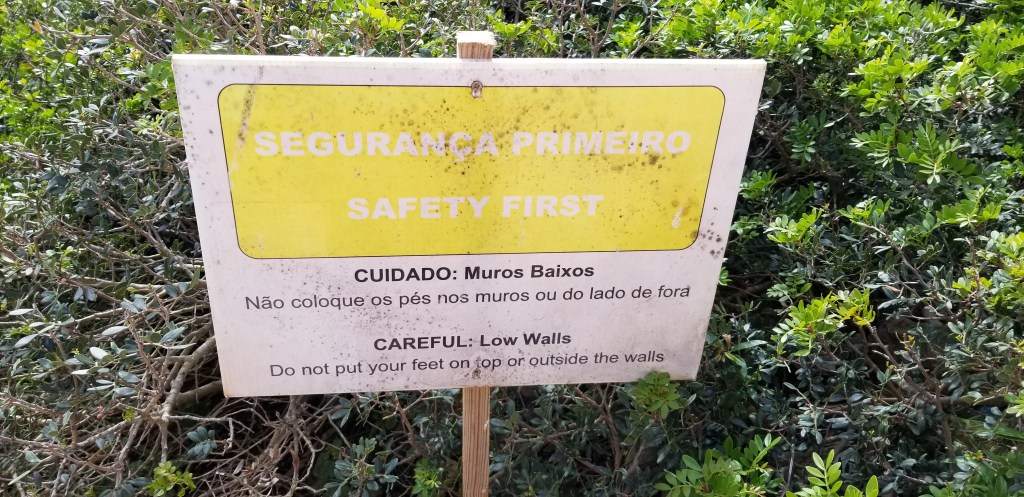
And my favourite sign of the day. It is unbelievable how many people go outside the walls, and the sea is a long way straight down.
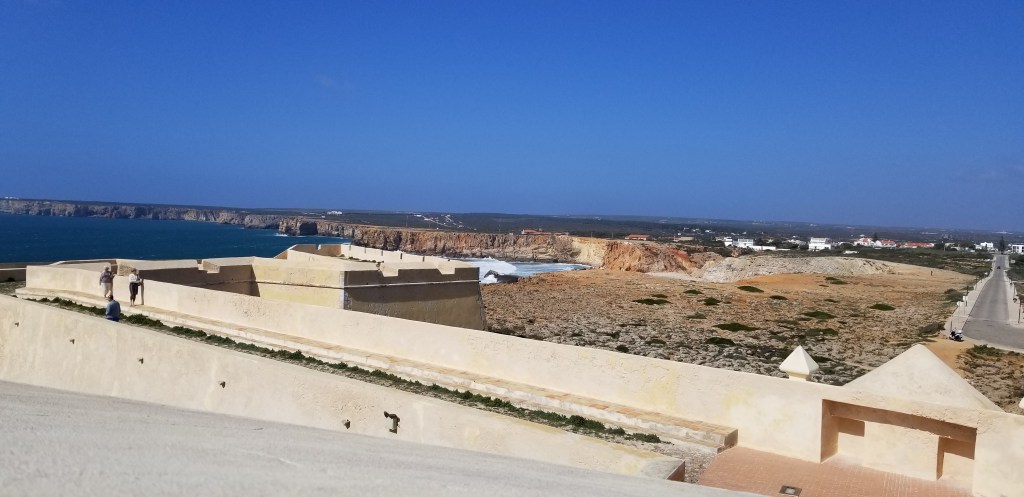
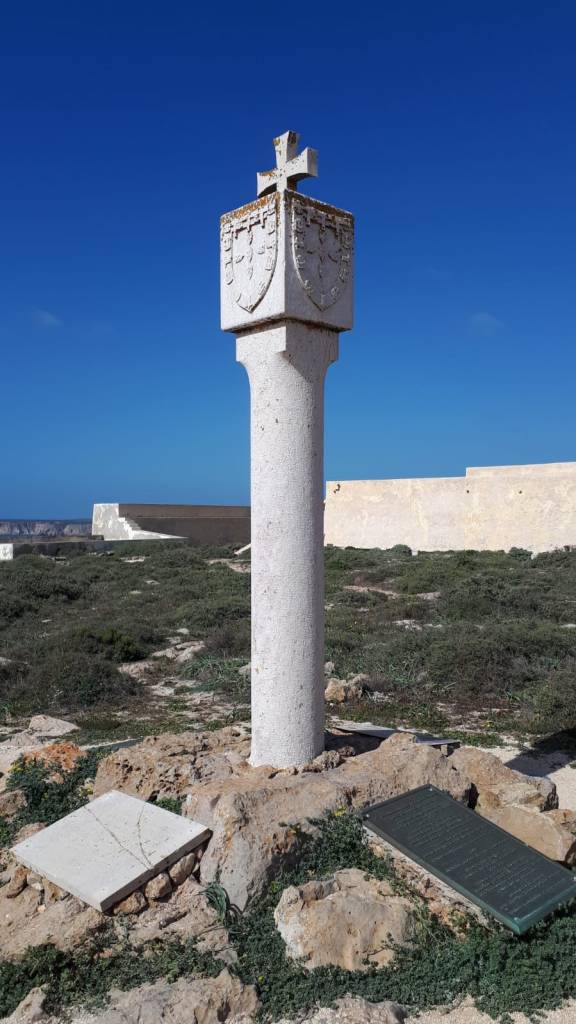
Our last stop for the day was at the Fortaleza de Sagres. Apparently it was here that Henry the Navigator devised his 15th century explorations.
There is no way to capture the sheer size of the fort. There is a 1.5 km cliffside walk inside the fort.
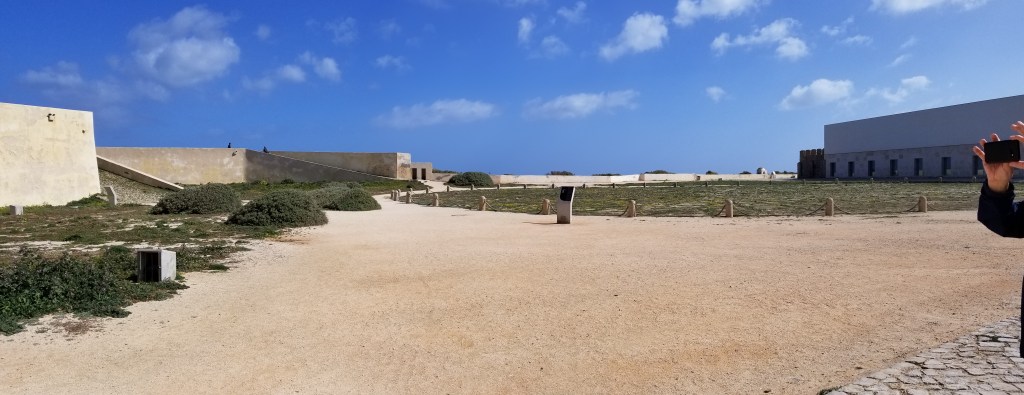

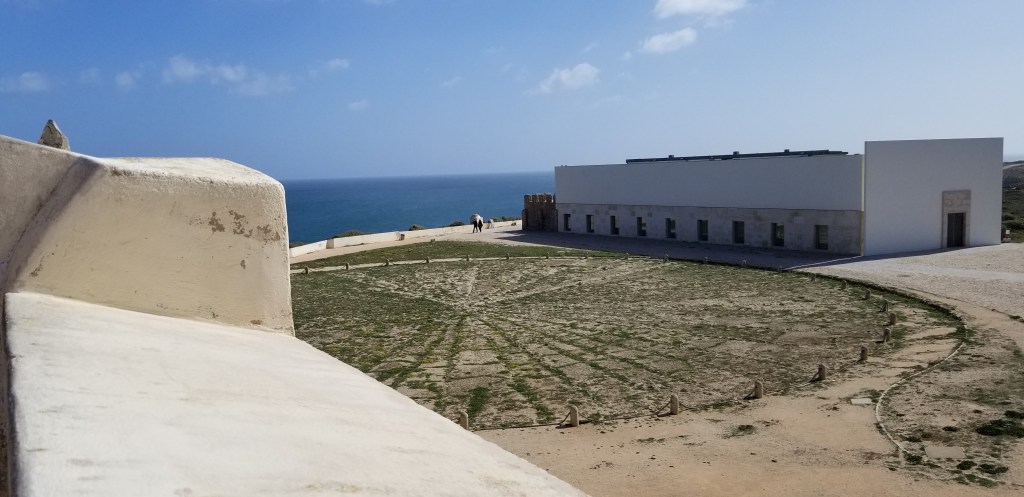
This giant wind compass was used to guide early navigation, to determine wind direction.
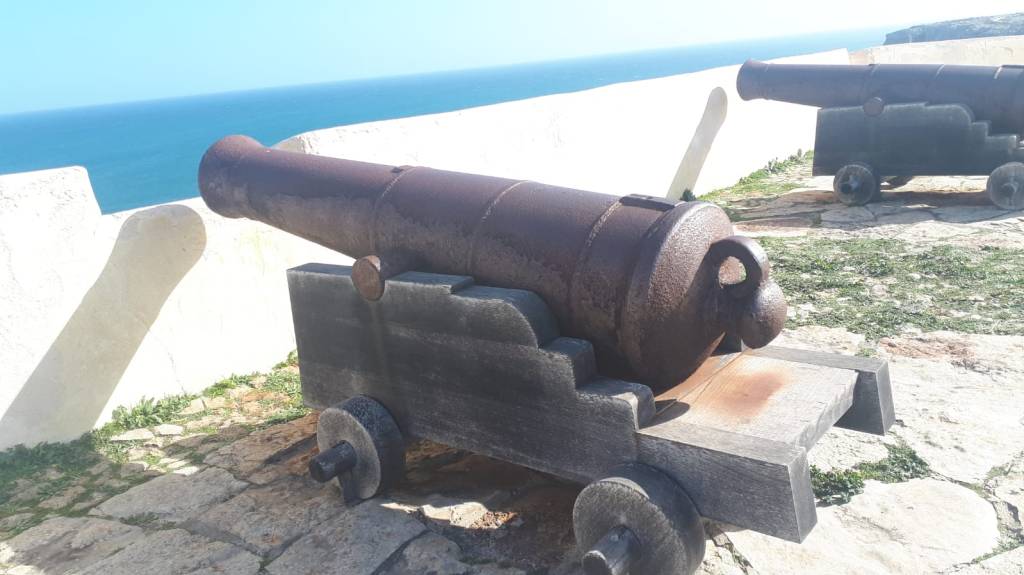
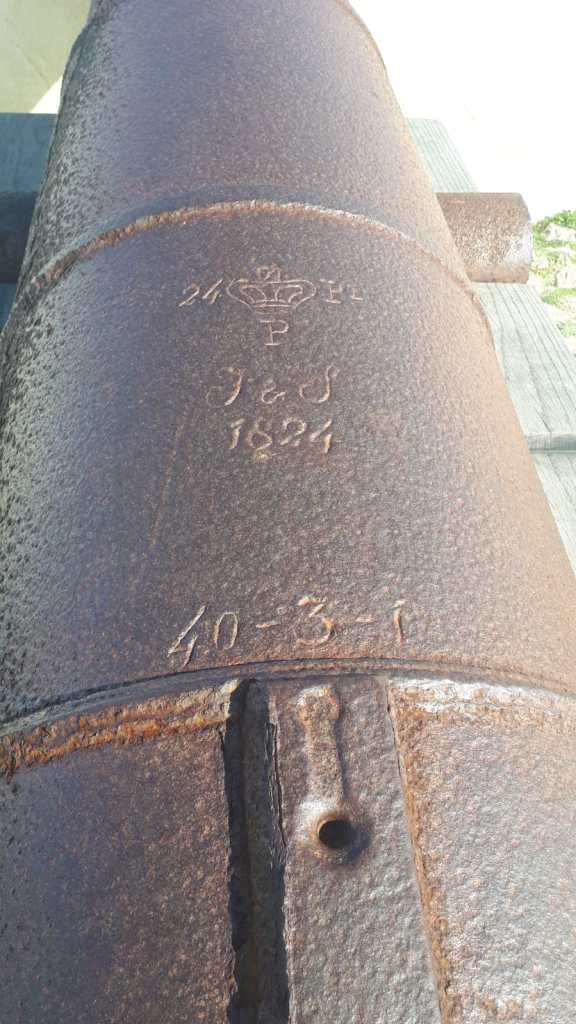
The date on this canon was 1824, but others were lots older.
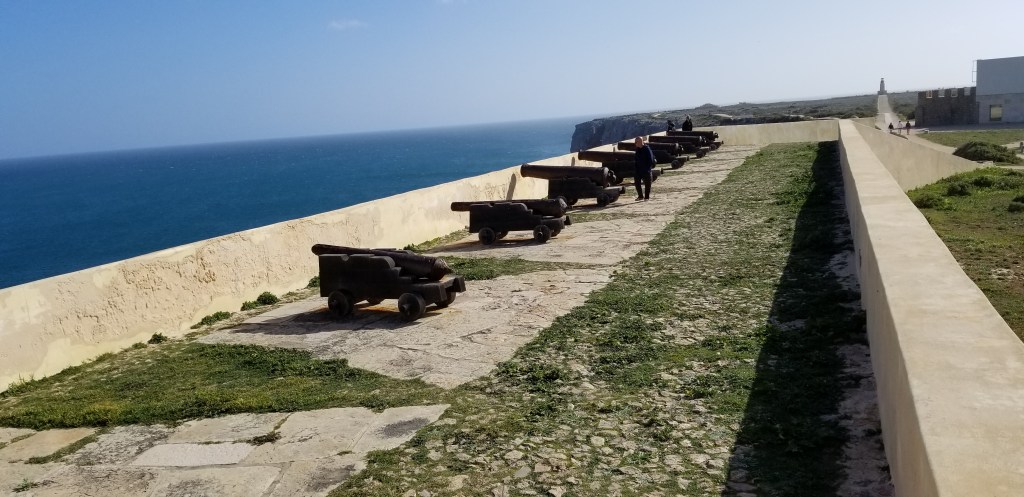
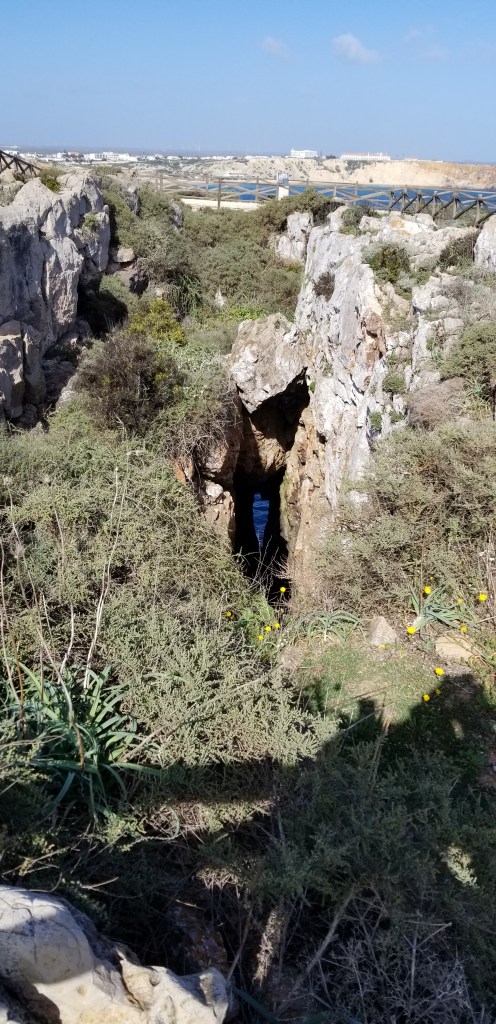
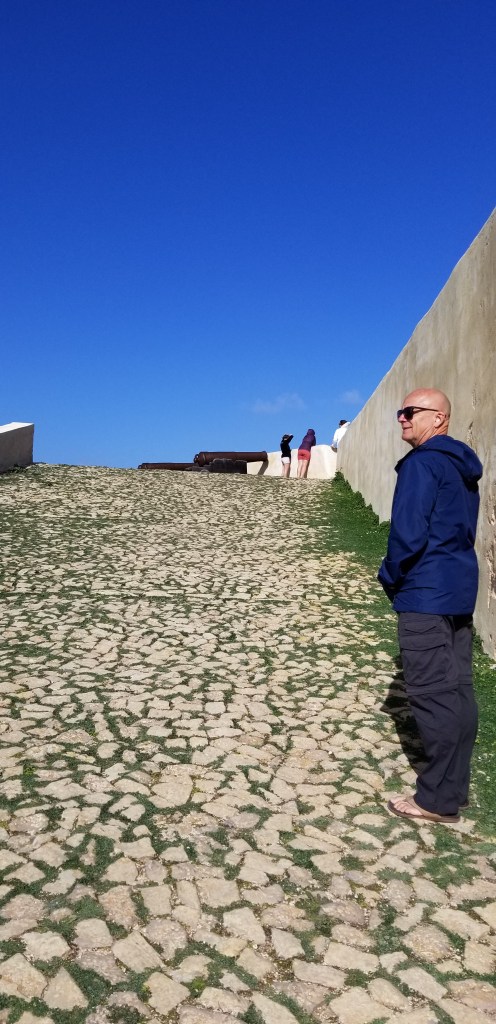
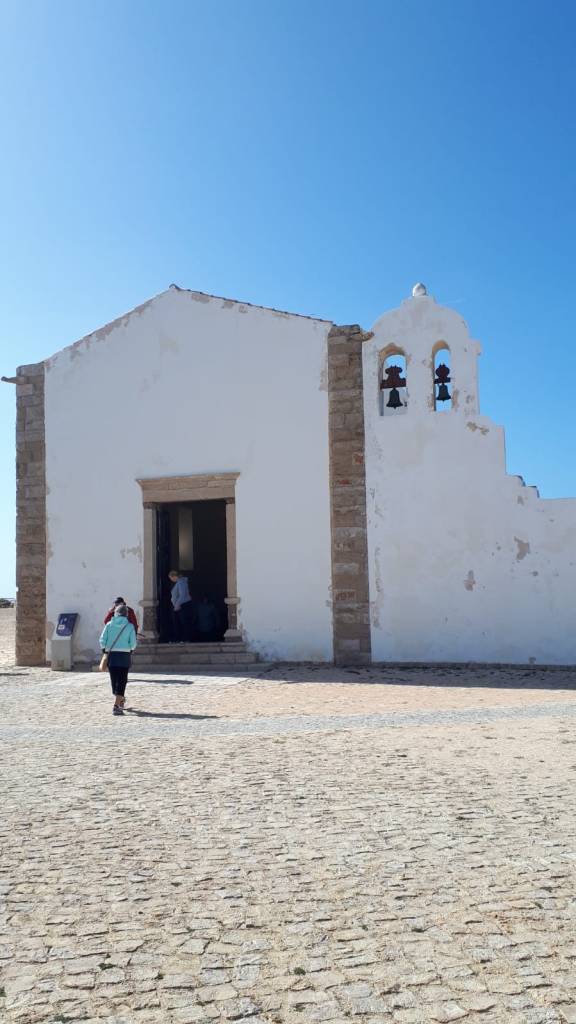
The water cistern.
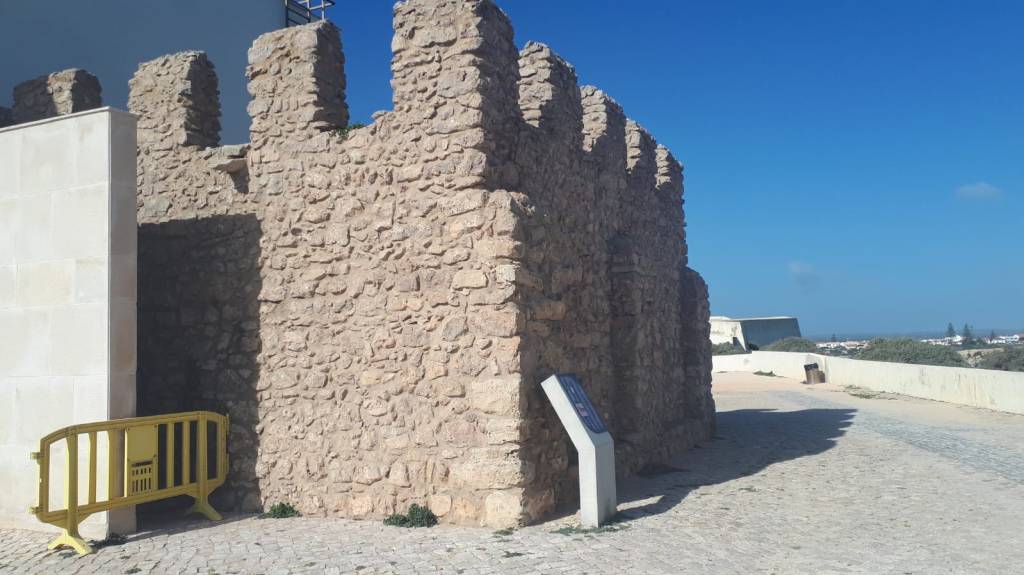
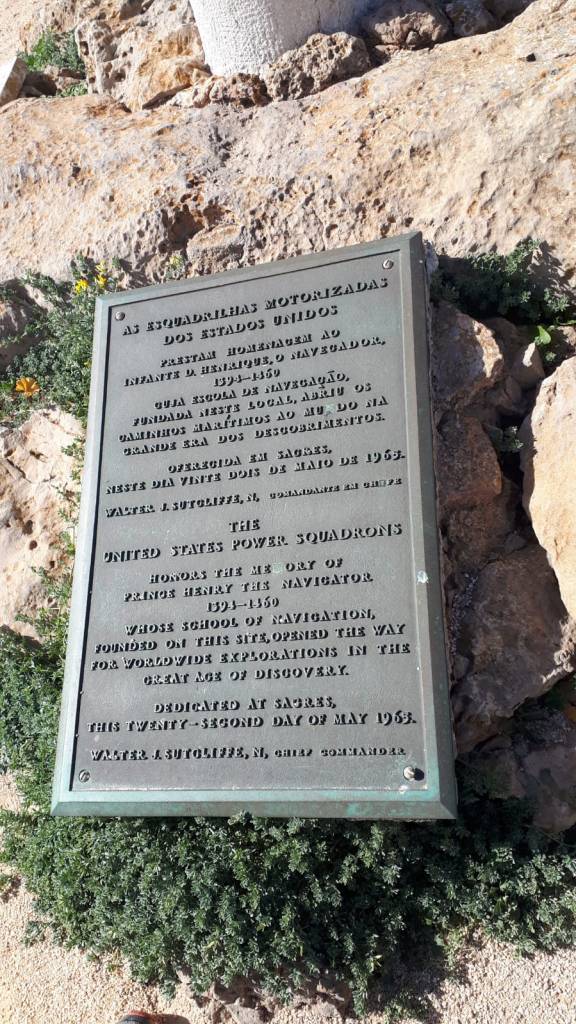
“The United States Power Squadron honors the memory of Prince Henry The Navigator 1393 – 1460 whose school of navigation, founded on this site, opened the way for worldwide navigation in the great age of discovery”
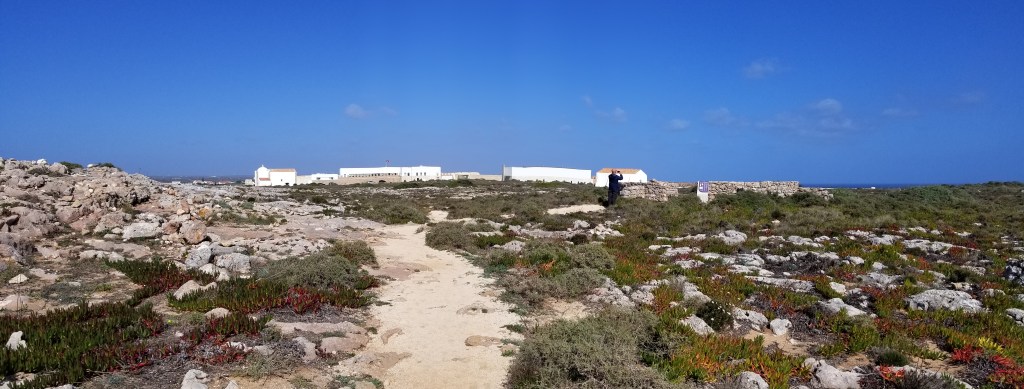
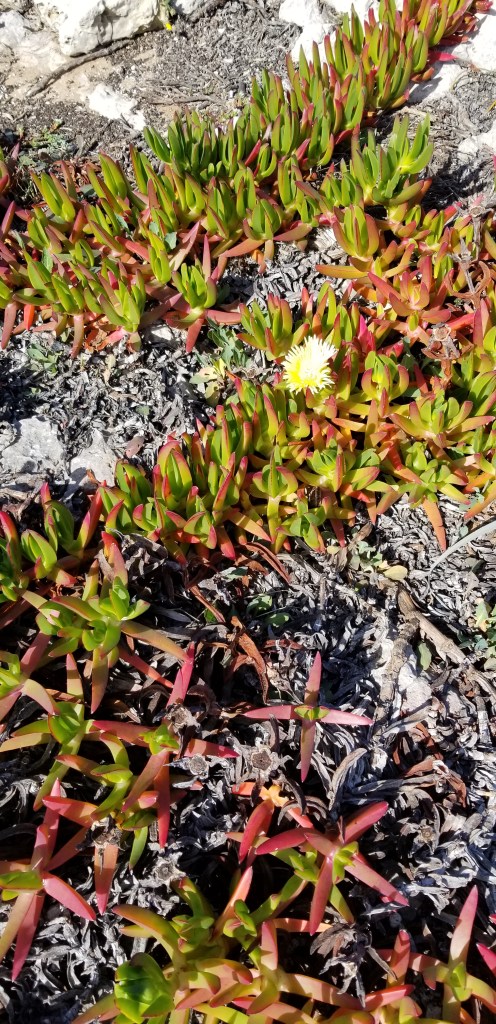
There were lots of hardy flowers in this desolate, wind swept landscape.
While this Ice Plant is beautiful it is not native to Portugal and is considered an invasive plant.

Our visit to Sagres was memorable for being so beautiful, rugged and windy. For sure worth visiting.
Cheers
Ruth
 ruthkennedysretirementblog
I loved exploring Sagres and seeing its beautiful lighthouse as well as the rugged coast. Portugal is such a fantastic and diverse country to explore, would love to go back one day 😀 Aiva
LikeLike